From the Chair...

Change is the only constant... Or is it?

It was almost 15 years ago when, at the orientation day of a vocational training scheme not unlike the AGPT, a speech delivered by the Director – who was himself a GP – doused the enthusiasm of a room full of largely female trainees with two messages of doom:

  • that we would be impacted by medical (specifically GP) unemployment, and
  • that most of the women in that room would have at least one pregnancy during training… and that he expected to be informed about it as soon as it occurred.

I can’t attest to the accuracy for the rest of the registrars who heard those words, but for at least for one person in that room those predictions were entirely incorrect. Hence I find myself here still: a GP unwilling to blithely accept all the negative predictions about our profession and the future GP workforce currently swirling around us.

While I may accept change is the only constant and adaptability a skill that we undervalue, I remain optimistic that GP supervisors and our trainees have plenty to contribute to the delivery of quality primary healthcare for our communities in the years to come. Change doesn’t always come in the forms we expect, nor is it always unwelcome; it is in fact an opportunity for us to make what is good even better.

The past month has seen me in many gatherings, with many opportunities to meet and engage with members, partners and stakeholders. The topics of discussion have ranged from the single employer model to the NTCER review, use of AI, medical education tips and peer support to name a few. There is wide acceptance of the inevitability of changes to come, however there is also a desire to hold on to things that matter to us: the collaborative nature of GP supervisors and medical educators, the ability to pass on business skills and help grow new practices, and most of all having fun while we do the things we each do best. This last was clearly demonstrated at the GPME conference on the Gold Coast, where GPSA’s Drs Simon Morgan and Jess Wrigley launched our newest education tool “Consultation!” – a fun, educational and at times frustrating board game that uncannily mimics a day in practice as the players navigate patient presentations and brain teasing challenges while racing each other to the tea room before all the cupcakes are gone! If you want to know more, please have a look at (link) and other learning resources on our website and in your mobile app store designed around the philosophy Justin Coleman refers to as “edutainment”: making GP training more enjoyable.

At the tail end of June, GPSA brought together your on-the-ground College representatives, the Supervisor Liaison Officers (SLOs), for the annual face-to-face meeting of the SLO Advisory Council. This meeting took place across 2 half-days in Brisbane, and included a really productive session with key members of each College’s leadership team including both RACGP President (and former GPSA Chair) Dr Nicole Higgins and ACRRM President Dr Dan Halliday. Another first, driven by GPSA’s MoU with GPRA, the second day started with a joint meeting of the two advisory councils representing the key participants in vocational training: the RACGP, ACRRM and RVTS SLOs and their registrar counterparts, the RLOs. This was a highly engaged, interactive session that spoke to the passion, commitment and alignment of both the two Advisory Council members as well as the two independent peaks committed to supporting them, and in turn you.

The next month will bring for these peaks further engagement as we enter into negotiations regarding the revision of the NTCER. GPSA will also continue to participate in broader training and supervision conversations such as the facilitation of higher quality supervision for pre-fellowship PGY1 and PGY2 trainees in community general practice, supporting practices and supervisors in the next AGPT placement process, and seeking clarity from the Colleges about timing of Semester 2 out-of-practice education so that practices can take back some control over their ability to plan and minimise the impact on their patients’ access to registrars. We encourage you to contact us and your SLOs with any concerns or issues that you might have to ensure your needs are voiced in our discussions with our sector partners and Commonwealth.

Until next time, I leave you with words that come from another of my favourite motion pictures (that’s “movies” for you younger folk):

“Change isn’t always bad. It’s just different.” – Chani (from “Dune”) 

Hopefully this reminds us that change, while often uncomfortable, really can lead to positive outcomes.

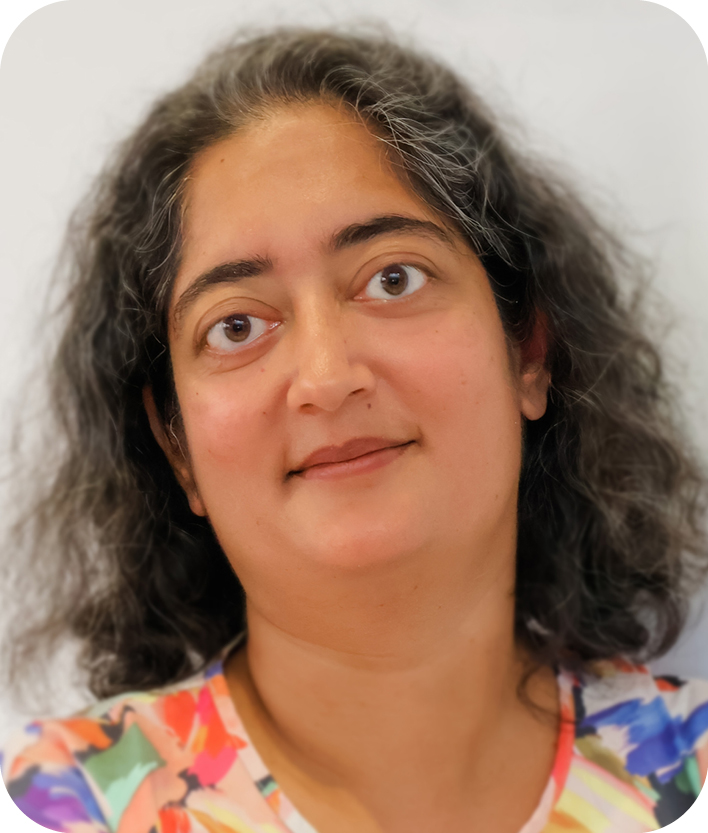
Dr Srishti Dutta
Chair

Date reviewed: 11 April 2025

Please note that while reasonable care is taken to provide accurate information at the time of creation, we frequently update content and links as needed. If you identify any inconsistencies or broken links, please let us know by email.


This website uses cookies. Read our privacy policy.

Out and about – May 2024

Living out of a suitcase through May!

May for our CEO started with a pleasant if lengthy drive to the South Australian Riverlands for the National SEM Conference, where she had the opportunity to speak with supervisors and practice owners participating in the SEM developed for the Renmark and Berri communities.

What struck her most was the value of co-design in these place-based solutions. The essential ingredients might be summarised as flexibility, mutual respect, and a willingness to investigate and respond proactively to the needs of all stakeholders – trainees, supervisors, practices, state-run health services and the community members they serve. SEM is definitely not a one-size-fits-all concept, and has limited application based on geographical and demographic context; but for certain rural locations in which GPs juggle their workload across both hospital and practice settings, it offers a means to improve and perpetuate equitable primary health care options for the community.

On her trip home from Berri, Carla was invited to attend a GP Supervisor Networking Dinner in Swan Hill. Hosted by Murray PHN, this fun night at One28 Doors gave an enthusiastic group of supervisors the chance to discuss what they most enjoy about their supervision role, and their concerns about retaining registrars in regional and rural locations.

The next road trip followed shortly after the first, seeing Carla head to another very pretty town that should by rights be teeming with GPs! This year’s Rural Doctors Association of Victoria (RDAV) Conference was held in Mildura, where a lot of the discussions were again around retaining junior doctors to the end of and following their vocational training.

The Hon. Anne Webster, Federal Member for Mallee and Shadow Assistant Minister for Regional Health – coincidentally the wife of possibly the best known Mildura GP in living history, recently-retired Dr Phillip Webster – spoke passionately about this issue at the conference dinner where she witnessed the presentation of the RDAV Lifetime Membership Award to Dr Sue Harrison OAM… by none other than Sue’s daughter, Emergency Department Clinical Lead at Swan Hill District Health, Dr Emily Harrison (FACRRM).

Closing out the month, Carla travelled to Cairns for the RACGP Practice Owners Conference with GPSA COO Leonie Chamberlain and Chair Dr Srishti Dutta. In addition to all that Srishti covered in the June Chair Report, GPSA held a lively networking night for practice managers; Leonie visited the Wuchopperen Health Service managed by the lovely Susanne Raistrick; the GPSA booth was never empty; and Srishti, Carla and other sector partners were in constant networking mode. What you can’t tell from the conference photos is just how busy the GPSA team was talking with practice owners and supervisors about the NTCER, and hearing about the many innovations our members have developed to maintain and expand their team’s focus on a high quality learning culture. Truly inspirational.

Date reviewed: 23 June 2025

Please note that while reasonable care is taken to provide accurate information at the time of creation, we frequently update content and links as needed. If you identify any inconsistencies or broken links, please let us know by email.

This website uses cookies. Read our privacy policy.

From the Chair...

Our only limit is our imagination...

We are almost at the halfway mark in this Year of the Dragon – a zodiac sign represented by the infinity symbol… signifying endless possibilities, and the energy we send out into the universe coming back to us.

May ended with quite an exciting few days in which I, along with GPSA’s CEO Carla Taylor and COO Leonie Chamberlain, had the occasion to capture some of the really great energy sent out by delegates and exhibitors at the RACGP Practice Owners Conference in Cairns.

Amongst those sharing the good vibes were former GPSA Chairs, Nicole Higgins, Bruce Willett, Trish Baker, and last year’s Deputy Chair Madhu Tamilarasan. We are truly fortunate that this membership organisation of ours has evolved through the efforts of such a dedicated collection of GPs, and doubly blessed to have a current Board whose broad range of skillsets and passion keeps GPSA committed to building on the values and mission of those who preceded us.

Attending industry conferences is a great way to network with like-minded people and keep abreast of new innovations, research outcomes and any changes in our professional landscape. For GPSA, conferences are a fabulous way to connect with our members, to listen and learn from their stories, to offer our support and share our resources such as the newly drafted “Guide for Practice Managers New to Vocational GP Training” into which we’re asking members to provide input* in a model of co-design. For you, by you… does this remind you of the dragon’s infinity symbol?!

The real reward the GPSA team gets from participating in these conferences comes in the form of members sharing their appreciation for and ongoing use of our services and best practice educational tools like our webinars and teaching plans – these apparently being closely followed by our convenient SCENARIO app!

The goal I had set myself for the Cairns conference was to meet at least one supervisor younger than me – and you’ll be pleased to learn I actually found more than one! The fact the first young supervisor I spoke to was participating in a Single Employer Model (SEM) pilot was even more of a boon. While these pilots were a hot topic at the Practice Owners Conference, “payroll tax” was the phrase on everyone’s lips! Rural and urban GPs, especially those who own their practice share one core concern though: how will they be able to sustain the serve they provide their community into the future.

The question I have fielded most in the last 8 months comes from potential supervisors wanting to know when they can be accredited to take on AGPT registrars. My answer is guided by College accreditation policies that are in turn responsive to the environment in which we find ourselves today, namely with some 1,000+ training-accredited practices in surplus of demand. Until AGPT registrar numbers balance out this situation, I ask all those who are keen to be involved in training to please consider taking on medical students. The latest MDANZ report suggests a further drop in medical students choosing general practice – admittedly explained by the uptick in the rural generalist interest, but still suggesting the; let us show them what general practice has to offer by giving them a great experience in their placement.

While we are progressing the NTCER review with the goal of completing a full re-write in time for the 2025.1 placement process, there are still plenty of opportunities for everyone involved in the supervision of registrars – on each and every pathway – to contribute via the NTCER survey and stage-2 workshops**. Our aim is to ensure the NTCER is enhanced to strengthen the relationship between the practice, supervisor and registrar by taking out the confusion and frustration in sites hosting trainees across multiple pathways and under different conditions such as ADF registrars training in the practice under a secondment arrangement (similar to what’s emerging with SEM pilots). Your input into this process is essential to achieving a practical and effective tool that can help streamline in-practice training and continue to be future-focussed.

June promises to include lots of opportunities for us to network and explore issues of importance for our members, kicking off with the GPME conference at which Drs Simon Morgan and Jess Wrigley will be launching GPSA’s fun new supervision tool, the Consultation game – a physical board game we know you will want to get your hands on… and maybe let your trainees play too! Simon is giving you a sneak peak of this brand new innovation in his June Education Update (see the image under the Webinars heading in the June newsletter!). Then I will be representing GPSA at the WildHealth Burning GP conference mid-month; and the following week GPSA will be in Brisbane for the annual face to face meeting of the SLO Advisory Council and a member networking night on Friday 21st June. If you can join us, please register now – these events are a lot of fun!

Until next month, I leave you with this quote from a family favourite, How To Train Your Dragon: “The sky is not the limit, our imaginations are.

Dr Srishti Dutta, Chair

*Please email PMlead@gpsa.org.au with your suggestions / comments regarding the draft “Guide for Practice Managers New to Vocational GP Training”

**Please email Carla to register your interest in participating in the June  NTCER workshops. 

Date reviewed: 15 April 2025

Please note that while reasonable care is taken to provide accurate information at the time of creation, we frequently update content and links as needed. If you identify any inconsistencies or broken links, please let us know by email.

This website uses cookies. Read our privacy policy.

From the Chair...

Change not necessarily the only constant!

April 2024 has been a month of many significant days, extremes of celebration and tragedy, but there is one I would like to highlight in particular.

ANZAC Day is an opportunity to reflect on a great many things: sacrifice, courage, security, commitment, loss, solidarity, trauma… all having a lasting impact equally on loved ones and the community at large as on those who have contributed to our armed forces. GPSA is proud to support our peers who currently serve, those who have served, those who supervise ADF registrars, and those who care for our veterans and their families.

With Autumn in full gear now, May seems to be shaping up as a month of action for all of us in the supervision environment. Some of you will be completing mid-term reports for your registrars, others getting ready for the next round of placements, and hopefully we’re all keeping up with our professional development requirements too.

In my many travels and roles as a GP, I am repeatedly engaged in discussions about GPSA activities. This feedback from a supervisor peer who attended a webinar presented by Dr Simon Morgan and Dr Tim Chappell shows the impact our ongoing educational delivery has on our members:

Thank you both for a very engaging seminar! I watched it because I am a supervisor but benefitted from it as a GP. Tim, you had me at “dementor” and “chocolate”….! I absolutely love my job and listening to what you shared, Tim, it articulated the “why”. It was just good to hear again about the importance of being a good listener, being in your patient’s corner, not giving up on them…. and smiling! As is the case in many places, there is a high demand for services (where I work) and a long wait time and I have wondered if I should be more “matter of fact” and a more efficient problem solver so as to be able to see more patients. But I think that one would then miss out on those nuggets of history that come forth with time, and also the meaningful doctor-patient relationships that we can have in our line of work.

And these words from a registrar who had reached out in a time of difficulty shows the benefit of what GSPA’s focus on the “how” of supervision ultimately has on our trainees:

I am at a new practice now – it is amazing what a difference a supportive supervisor can make. Feeling settled and now actually can start to learn.

It is when we receive such feedback that I know our impact as supervisors goes well beyond supervision, and GPSA’s impact as the supervision peak truly is vital for the future of general practice.

GP training will continue to change, as will general practice. As part of this community of practice, we will have to evolve and keep up with the world around us, yet we can do so in the knowledge that the GSPA values shaped by the “why” and the “how” of supervision will remain a constant on which you can rely.

The other thing you can depend on is GPSA’s commitment to representing you faithfully in our stakeholder engagement, the future direction we are advocating for on your behalf, and in the priorities you share for the current review of the National Terms and Conditions for the Employment of Registrars (NTCER).

If you haven’t already done so, please take some time out to complete our National Survey for 2024. This is not an idle exercise. This really is your opportunity to influence future policy around a range of things including workforce, remuneration and recognition of supervision. The information we obtain from this survey helps us share the real issues at the coalface with policy makers and funders, emphasising what needs to change and what needs to stay the same. While this is of course the long term benefit, there’s a short-term one too! Completing “ENGAGE 2024 – Building a better future together” counts towards your CPD (RP) as an added bonus. This survey is open to everyone involved in GP training – supervisors, GPs, practice managers, practice nurses, and others who support learners in general practice.

For anyone who has been involved in registrar employment – terms, conditions, or contract oversight -, now is the time to help us maximise the opportunity to update this legally valid employment instrument. The inevitability of change applies in this area of GP training too, with other employment models being explored under the Single Employer Model pilots, but the NTCER remains relevant to the bulk of GPs-in-training, and we need your contribution to ensure its robustness and utility is maintained and possibly broadened to non-traditional contexts (i.e. beyond the employment of AGPT registrars). We’ve come up with a variety of ways for you to tell us what’s important, which key areas you would like addressed to ensure the next version of the NTCER is fit for purpose into the future. Let us know your views via the NTCER survey and/or by joining one of our member workshops or via email.

So until next month…

May the force be with you!

Dr Srishti Dutta
Chair

Date reviewed: 15 April 2025

Please note that while reasonable care is taken to provide accurate information at the time of creation, we frequently update content and links as needed. If you identify any inconsistencies or broken links, please let us know by email.

This website uses cookies. Read our privacy policy.

From the Chair...

Celebrating & Reflecting

March was certainly a month for celebrations and reflection – Harmony Day, International Women’s Day, Holi, St Patricks Day, Ramadan, World Compliment Day, International Day of Happiness, Lent and Easter….

Following the first meeting of the General Practice Training Advisory Committee (GPTAC) in Canberra at the tail end of the month, I can now share yet another reason for GPSA members to reflect and celebrate: the release of the AGPT Program National Report on the 2023 National Registrar Survey | Australian Government Department of Health and Aged Care.
For me, the key messages in this report reiterate the vital role the people at the coalface of GP training played in the successful transition to college-led training – and continue to play as the lifeblood of high quality primary care for the Australian community.

The satisfaction of registrars with our members has remained consistently high from 2017 to 2023. Indeed, the analysis by the Australian Council for Educational Research (ACER) of over 1000 open-ended responses in the 2023 survey shows that more than 92% of registrars attributed the best aspects of their training experience to:

  • their current workplace or practice;
  • supervisor and mentor support; and
  • the diversity of patient presentations.

This feedback reinforces the value of GPSA’s commitment to facilitating a supportive and well-structured clinical learning environment for tomorrow’s GP workforce – through our ever-expanding repository of educational resources, our virtual community of practice, the GPCLE quality improvement tool we are currently refining, our upcoming biennial review of the National Terms & Conditions for the Employment of Registrars (NTCER), and even the Memorandum of Understanding (MoU) recently signed between GPSA and our sister peak GPRA.

In all the many tables at which GPSA has a seat now, it is a true pleasure to highlight the role supervisors, practice managers and other members of training practices play in the success that we as a profession can claim today and into the future. My job as GPSA Chair is largely focused on advocating for you in your supervision of medical learners and trainees across the educational spectrum. I continually speak to both GP specialty colleges regarding topics our members flag as priorities, such as dual recognition of supervisor professional development and similar efficiencies to ensure minimisation of red tape and maximisation of well-being. To get this right though, we are reliant on your engagement and input.

To this end, you will soon receive an invitation to participate in the GPSA national survey – newly and aptly branded “ENGAGE”. I cannot stress strongly enough the importance of the information you provide through this data collection opportunity: the more you contribute to GPSA research such as this survey, the greater an investment we can make in your future growth and sustainability.

We will soon be launching into the NTCER review – which again is completely reliant on your input to ensure we represent your needs faithfully in this process. The NTCER remains a tool that provides protections for both training practices and registrars, and this year we are looking to enhance it and expand its application to non-traditional contexts such as vocational training pathways outside the AGPT. No doubt you have ideas about improvements at both a big picture and granular level, and we sincerely want to hear about these! Please submit your expression of interest here if you would like to be involved in workshopping the NTCER for 2025-26 with us.

Looking forward to working with you on the key activities lined up for April. Until then, as Yoda would say, “Pass on what you have learned”!

Dr Srishti Dutta
Chair

Date reviewed: 15 April 2025

Please note that while reasonable care is taken to provide accurate information at the time of creation, we frequently update content and links as needed. If you identify any inconsistencies or broken links, please let us know by email.
This website uses cookies. Read our privacy policy.

From the Chair...

It sure has been a busy month or so - no doubt if you’re looking after a new trainee, you will be feeling this along with me!

I hope it’s a been a good start to the training year for you, and want to remind you that, whenever guidance might be needed, you are not alone. 

At the vocational training level, your College supports include your local SLO and relevant Regional Team member(s); complementing these, regardless if you are involved in placements for medical students, prevocational doctors or vocational registrars, GPSA offers the Community platform as a supervision intranet of sorts, where you can seek help from your peers and brainstorm solutions for emerging problems. 

We also provide advice via email for all things NTCER, registrar onboarding and supervision support, along with regular educational webinars and over 1,000 best practice resources and digital tools.

Supervisors and practice managers in GP training form a vital community of practice, and February was marked by many of our sector partners releasing pre-budget submissions that paid homage to this community: aligning with GPSA’s priorities of recognition, reward and respect for our members.

We actively seek cross-portfolio recognition and reward for training practices and supervisors and commend all stakeholders who have used the platform of their own pre-budget submissions to argue the need for greater support of all parties at the coalface of GP training. This includes the RACGP’s calls for improved funding of GPT1, when significant trainee support is provided by supervisors, as well as training programs like FSP and PEP – which need to be sufficiently funded to allow consistent quality of training and supervision for all GPs in-training across the country.

I firmly believe that the increasing burdens and complexity of healthcare delivery, coupled with the worldwide shortage of medical workforce, make a collaborative focus on developing high quality “medical generalism” the only true solution for our communities. Strengthening and supporting placement experiences for optimum learning of these generalist skills is essential for a robust, effective future workforce. The breadth of knowledge and skills we command and convey through GP supervision is the bedrock of our health system, such that every training practice is a workshop where the next generation of GPs is crafted with a commitment to quality.

With the power in the hands of our members when it comes to the delivery of high quality placements, for the last 10 months GPSA’s research team has been tackling the gargantuan task of developing a tool to support benchmarking and quality improvement in GP training. Based on the best practice framework known as the General Practice Clinical Learning Environment (GPCLE), this tool now needs your input. As a supervisor of both medical students and GPs in-training, I am keen to contribute to the refinement of this innovative tool, and I encourage every member, everyone – educators, supervisors and practice team members – involved or aspiring to be involved in GP training across all educational levels, to test and provide your feedback on the GPCLE tool to ensure it serves as a fit-for-purpose resource to maximise the power you have in the future-proofing of primary healthcare.

Until next month… may the force be with you!

Dr Srishti Dutta
Chair

Date reviewed: 15 April 2025

Please note that while reasonable care is taken to provide accurate information at the time of creation, we frequently update content and links as needed. If you identify any inconsistencies or broken links, please let us know by email.

This website uses cookies. Read our privacy policy.

From the Chair...

Prestige, pay, and recognition

I write this Chair report hoping that you have all had a great holiday period and returned to your workplaces reinvigorated and refreshed. It’s February already, a month of this year already gone – a month that has seen us acknowledge some of the positive trends emerging after a full year of College led training.

For me, this year started with a long-awaited trip to see my family, visit my roots, and reflect on my early exposure to community physicians in the small town where I was born. This certainly set the tone for me to meet with the new GPSA Board to strategise as we did mid-January – with new ideas and energised minds – about what promises to be an exciting year ahead.

The most recent statistics show an increased interest in vocational GP training, notably with rural generalist positions fully subscribed. This has not been achieved without a lot of hard work, and GPSA is honoured to advocate for the supervisors who remain an integral part of growing this workforce through the quality of the experience they provide, irrespective of where they may be located. January has also seen the recognition of several GPSA members on the Australia Day Honours list. I invite you to join me in congratulating:

  • Dr Jeff Robinson, OAM;
  • Dr Christine Longman, OAM;
  • Prof Charlotte Hespe, AM; and
  • Dr Suzanne Harrison, OAM: Co-Chair of the SLO Advisory Council

This year we hope to build on the existing work that our members do in the community as both GPs and supervisors: community consultants and leaders. As we move towards formal recognition of the rural generalist sub-specialty, it is worth considering the role of the supervisor in general practice through the RG lens. Supervisors provide the hands-on guidance, teaching, training and management advice that would be provided by Consultants in the hospital context. It is only through our supervision role that a sustainable future GP/RG workforce can be developed; it is our influence over the learning experience that inspires the GPiT to become a GP/RG, and from there, a future supervisor.

In the GPSA pre-budget submission, we seek the value of supervision to be recognised through a more collaborative mindset both within primary care and across potential funding sources. While various solutions are at play to attract medical students and junior doctors to general practice, the ability to capitalise on these initiatives for the long-term benefit of our communities relies on the continued commitment of both existing and future supervision teams. This commitment in turn relies on respect for the critical role our members play, taking the form of an increase in remuneration and prestige, and greater recognition within our wider GP community as well.

In coming months, prevocational exposure to general practice will significantly increase across urban, outer metro and rural regions, with expanded medical student placements soon to follow. While this has the potential to spark the youngest and brightest minds into action as our future colleagues and the problem solvers of the next generation, the success of this opportunity will be commensurate with the level of support and empowerment provided to the training practices and supervisors responsible for cultivating medical students, prevocational doctors and vocational trainees into the autonomous, patient-centred healthcare professionals our communities need. It all starts with recognition.

And this report ends with recognition too – specifically recognising the amazing contribution of one individual known to and responsible for inspiring so many across this sector and beyond. As the first semester of 2024 kicks off, the life and legacy of Prof Dennis Pashen – Founder and Former President of ACRRM; Former President of RDAA; Rural Generalist; Supervisor; passionate supporter and member of GPSA – will be celebrated in a memorial that befits the life work of a premier advocate for community healthcare. May Prof Pashen long be remembered as a driver of change.

Dr Srishti Dutta
Chair

Date reviewed: 15 April 2025

Please note that while reasonable care is taken to provide accurate information at the time of creation, we frequently update content and links as needed. If you identify any inconsistencies or broken links, please let us know by email.

This website uses cookies. Read our privacy policy.

From the Deputy Chair...

The 'Santa Delusion' and reading the fine print

What an interesting year we have had with the transition to College-led training. This has gone remarkably smoothly at the coalface – with only a few hiccups along the way, probably fewer than expected – which has a lot to do with the resilience of GPs and practice teams.

I would like to express from all at GPSA the enormous admiration we have for GP supervisors and training practices across the country. Given GPSA’s membership consists of more than 7,000 supervisors and 3,000+ honorary members, you represent arguably the largest unrecognised charitable organisation in Australia.

The peak representatives of GP supervision – the Supervisor Liaison Officers (SLOs) – met in Sydney on 8th December 2023. SLOs from all states and the NT participated in this Advisory Council meeting, representing RACGP (AGPT and FSP), ACRRM (AGPT, IP and RGTS) and RVTS. The passion and commitment to GP training was readily palpable and augurs well for the future of GP training if supervisors are appropriately supported. The main issues facing GP Training were discussed in an open and frank meeting with Georgina Van de Water representing RACGP as well as ACRRM’s President Dr Dan Halliday and General Manager of Education Services, Kyra Moss. The key issues identified by SLOs were clearly presented so that there was no question about what was important to GP training and the desired outcomes.

All SLOs were on the same page: we have significant headwinds in GP training, and future health workforce is dependent upon these being clearly addressed to avoid further negative impact to the already perilous state in which we find general practice currently.

The main issues addressed in no particular order were: supervisor support and professional development, bi-College collaboration and interface, registrar caps, Single Employer Model (SEM), the importance of data to drive progress, placement processes , and , specifically for RACGP, the new EASL requirements.

Supervisor professional development (SPD) – which has simultaneously experienced a significant reduction in support and a progressive increase in requirements – runs along the same lines as GP continuing professional development (CPD)… increasing requirements of a profession in a dire situation. The unintended consequences of reduced participation and loss of quality supervisors are readily apparent. There is only so much supervisors can give, and the tank is running on empty.

Placement process and registrar caps – a challenge for everyone but probably more so for registrars with many horror tales out there about practices receiving either unmanageable numbers of applications… or none; and registrars and practices having 1 week to arrange interviews and finalise offers. It is a mixed story across the country, NSW has obviously had the most experience of this process, and it seems to have become a game of ignore the rules or risk not retaining a registrar. Anecdotally, it seems to have failed on the two key metrics of placement in best quality training practices or highest area of need.

SEM – the devil is in the detail. This seems to be a very hot issue with state Health Ministers across the country champing at the bit to get a piece of the action. Terms like “cost neutrality” and “control” of primary care workforce carry a sense of foreboding and beg the questions: who is paying the piper? who is missing out? It cannot be cost neutral when an extra layer of bureaucracy is installed without extra funding. Fortunately, we had some reports from members and SLOs on the nature of contracts being proposed in NSW which really reinforced the view that the devil is in the detail. Please, read the fine print.

RACGP’s Early Assessment for Safety and Learning (EASL) – dramatic increase in demand put on supervisors for a payment of… $Zero. There was reassurance that we do not necessarily need to review every consultation for the full 4 weeks and can make a determination earlier, but no funding for those who do require closer monitoring. I must confess that I am a strong supporter of the concept and many supervisors do undertake this process both as educational and risk management for the practice. Indeed, studies undertaken by Drs Simon Morgan and Gerard Ingham do highlight the number of errors early term GP registrars make, many minor but still a significant number of serious errors. Ideally, in my humble opinion, we should be funded to review all consultations for the first three months of a GPT1 registrar term with time set aside for face-to-face discussion, random case analysis, etc. This would greatly improve competency and patient outcomes especially in the areas of rational investigation and prescribing practices. I would argue that if we did the study and looked at the data it would end up surprisingly cost-effective across the wider health system.

Data is vital in our field, and I think the 2021 GPEx report to which GPSA contributed, “The financial costs and revenue associated with teaching and supervision in general practice”, should be on the Christmas Reading List for all Health Ministers, RACGP and ACRRM Boards.

Speaking of Christmas, I do believe in Santa Claus. I wrote him a letter before Christmas, and to my surprise I actually received the requested gift. I asked that, as GP supervision was fundamentally a charitable service, we should be given DGR status and tax exemption from the ATO. To my surprise, in my stocking on Christmas Day was a letter from the ATO confirming that all payments for GP supervision would become tax free and the repayment would be backdated for 20 years and to please find a refund cheque enclosed!! Then I read the fine print… you have never received any payment whatsoever for supervising GP trainees so enjoy your tax-free status on $Zero income!

I would be happy to pay tax on any income from supervision, which I would argue should come through an MBS item number for every phone call and patient review I (and all supervisors) undertake for our registrars.

GPSA is listening and batting strongly on all these issues for training practices and supervisors; I would ask that you all be forthright and vocal about any perceived challenges and instances of neglect in GP training through the year ahead. Your contribution is not only vital to your patients and communities today, but to the health of all Australians going forward.

Wishing you all a very Happy New Year.

Frank Maldari

Date reviewed: 15 April 2025

Please note that while reasonable care is taken to provide accurate information at the time of creation, we frequently update content and links as needed. If you identify any inconsistencies or broken links, please let us know by email.

This website uses cookies. Read our privacy policy.

GPSA Chair Report – December 2023

Celebrating the year that was, and excited about what lies ahead!

As I write this Chair report, the last one of this year and my first as Chair, I cannot help but reflect on what a phenomenal year 2023 has been for all of us.

General Practice continues to show we are resilient and resolute despite the challenges that have come our way – attempting to return to a new normal post-COVID, the MBA’s new CPD requirements, and the transition to College-led training to name a few.

The year has also brought opportunities to reconnect, reinvigorate and reinvest ourselves in sharing, teaching and learning across the many events where GPSA has been well represented: PONC, RDAQ, GPME, AAPM, RMA, WONCA, the Australian and New Zealand Prevocational Medical Education Forum, and AIDA. I am sure our members and stakeholders maximised these opportunities to meet with our CEO Carla Taylor, COO Leonie Chamberlain, my predecessor Dr Kevin Arlett, Education Manager Dr Simon Morgan, and Director of Research and Policy Dr Samia Toukhsati.

The GPSA board remains committed to supporting all staff members in our small but effective team in order to deliver high quality educational content, trailblazing research, and useful resources. We envisage these activities and resources will ensure ongoing support to our supervisor and practice manager members, and keep us aligned with our ultimate mission to be the voice of a thriving GP training sector that is united, suitably recognised, rewarded, and respected as the cornerstone of this nation’s healthcare system.

This year we have run a total of twenty (20) webinars that were attended and viewed in record numbers by our members, and the GPSA teaching plans and guides continue to be widely downloaded by supervisors – and at times registrars to support their learning. Kudos to our education team Drs Simon Morgan, Jess Wrigley and Matt Burden, the latter two joining GPSA in an official capacity this year.

The research and policy team has more than its fair share of wins too, having just learnt we’ve successfully secured funding for “Strengthening the recruitment, support, and retention of women GP supervisors: a framework and implementation model” from the Royal Australian College of General Practitioners’ (RACGP) Education Research Grant 2024 program. This is a legacy piece that was conceived under the guidance of Dr Nicole Higgins in her time as Chair.

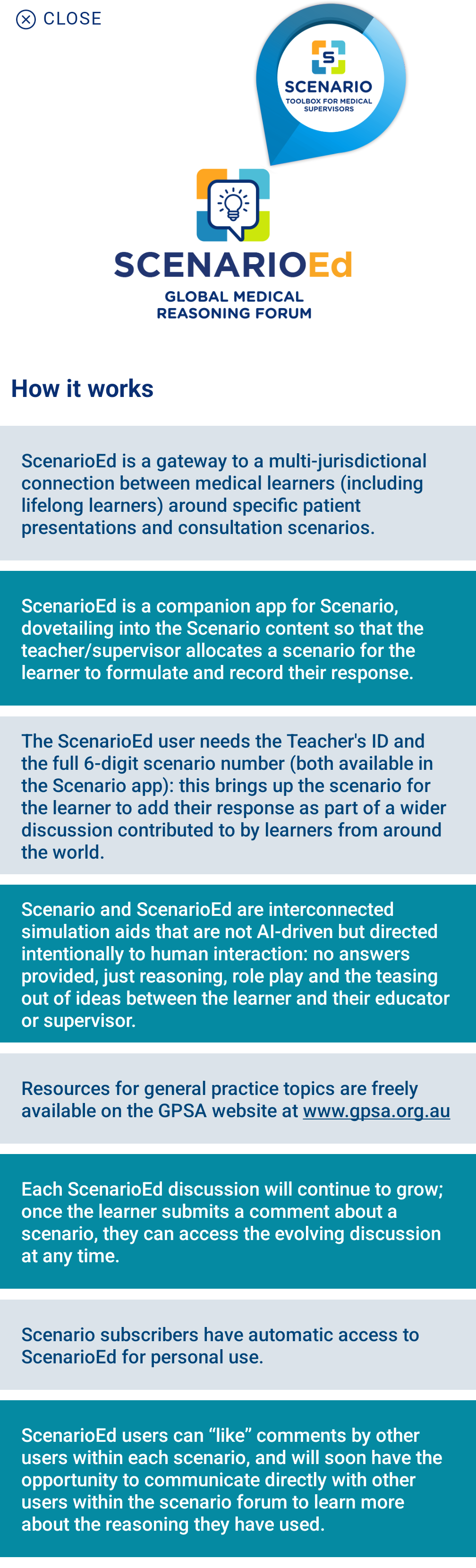
GPSA also launched the “Scenario” mobile app – a clinical reasoning toolbox designed to augment the learning experience for educators, supervisors, medical students, and trainees alike – and will soon be rolling out a student-facing forum app that ties in with this, “ScenarioEd”, for medical students and trainees across the globe to better experience the international community of practice we work in.

We are indeed still the little team that gets a lot of stuff done!

I take on the role of Chair for the GPSA Board with a mixed bag of emotions. On the one hand, we said goodbye to Dr Kevin Arlett our previous chair, Dr Justin Coleman and Dr Madhu Tamilarasan – all stalwarts in their own right in the GP training domain. You will be missed. Yet at the same time I am looking forward to working with an incredibly talented and diverse Board with two new members, Drs Nick Tellis and Shea Wilcox. We are grateful you have chosen to bring your wisdom and enthusiasm to the GPSA board. This a Board that seeks to represent the best aspects of GP training and its members in its diversity. It captures not just diversity of identity, also of skills, thinking, type of trainees, geographical location, and GP experience/roles. We haven’t quite reached perfection, but I am a firm believer of progress over perfection.

Lastly, I will say this: the coming year will bring us many new issues to navigate such as the 2024 review of the NTCER, new rounds of GP registrar placements, Single Employer Model, and a steady increase in the number of medical student placements in community general practice. Ultimately it is the junior doctor and medical student experience that is a testament to how we have succeeded in enabling and ensuring a safe and thriving learning environment. We will continue to work closely first and foremost with GPRA and indeed other peak bodies – RACGP, ACRRM, AIDA, RDAA and AMA – and advocate for sustainability of our supervisor workforce and training practices.

Training practices and supervisors currently function in an imperfect environment and yet have always delivered effective teaching. Supervisors are to GP education what GPs are to the nation’s healthcare; this expert generalism in training / teaching under our apprenticeship model is not easy to measure and too often feels invisible. Future-proofing GP teaching and training includes making supervision in practice viable and sustainable – financially and in terms of cognitive effort. I hope we do not forget that there is a fine line between heroism and martyrdom.

To the members of GPSA, this is an organisation that is inclusive in values and in action. I invite supervisors irrespective of where you are and who you supervise/teach to join the GPSA Community. The Community reflects our commitment to developing communication channels for peer-to-peer networking and mentoring, and we will receive all member contributions with gratitude.

To end (and this is particularly for the Marvel fans amongst us), I will borrow the words of the one called Optimus Prime: GPSA members and potential members, “it is time to come home!

Date reviewed: 04 November 2024

Please note that while reasonable care is taken to provide accurate information at the time of creation, we frequently update content and links as needed. If you identify any inconsistencies or broken links, please let us know by email.

This website uses cookies. Read our privacy policy.

GPSA Chair Report – October 2023

Conferences, AGMs, Registrar Placements... It's just that time of the year!

We look forward to welcoming as many members at our AGM as possible, so please attend if you can, and make sure that you keep supporting us just as we support you!

To change it up, this month's Chair Report has been recorded as a short video for you...

For avid readers, I've also provided the written version - something for everyone!

Hi all, another month and we are preparing for the AGM.  There are 3 Elected Director positions vacant, plus the option for 2 appointed Board Director positions available.  Nominations have closed and we are running this AGM as a virtual meeting, so please make sure you can attend, or if not, please get your proxies in to the Company Secretary (Carla) according to the instructions here.
The allocation of Registrars for 2024 has now occurred in most of the country and there has been a lot of angst from Registrars and Supervisors re the process.  ACRRM allocations have been smooth but the very short timeframes and the “open market” approach from RACGP has been fraught.  On the first day the TMS could not cope with the volume of potential applicants, some practices receiving many applicants and others not enough! Positions have been limited with a lot of practices who have received a much smaller number of Registrar positions  than they felt that they were expecting.  There were other issues as well, which were discussed on our Community Platforms. All these comments are being collated and will be discussed with RACGP at our next meeting.  I get the feeling that a lot of the anger and disappointment could have been avoided with much clearer and more timely communication with RACGP members. 
On the brighter side, our new app “Scenario” has been released now and there has been an overwhelming response to it.  This app will allow the user to generate a clinical scenario in a number of different areas with a suggested prompt or two.  These scenarios are great to use in training sessions and everyone who has seen the app so far has been very quick to heap praise upon it.  Get it now from your Apple or Android app store!
We have of course been attending a number of conferences recently, showing our support for Supervisors and Supervising Practices.  We always seem to have someone at the booth talking about quality GP Supervision and looking at the educational supports that we provide as well as looking at “Scenario” and just asking for advice.  We have been presenting various papers at these conferences and this shows the quality of research that GPSA undertakes – congratulations to Sami and our research team at GPSA. 
Please let us know if you want to be involved in the research that is undertaken by us. We are currently developing an evaluation tool for the GPCLE (General Practice Clinical Learning Environment) that is described on our website here

Date reviewed: 15 April 2025

Please note that while reasonable care is taken to provide accurate information at the time of creation, we frequently update content and links as needed. If you identify any inconsistencies or broken links, please let us know by email.

This website uses cookies. Read our privacy policy.