FAQ Empowering Neurodivergent Registrars

Neurodiversity in General Practice

Neurodivergent individuals, including those with ADHD and autism, bring unique strengths to medical practice. However, without adequate support, they may struggle with the demands of general practice training. They may come into general practice training with a diagnosis, or somewhere on their journey of learning more about their neurodiversity.

ADHD is a disorder of regulation. Approximately 4% of Australians under age 45 have a diagnosis of ADHD. Cognitive, physical and emotional dysregulation all feature to some degree in all people with ADHD. Doctors with ADHD often have strengths in creativity and cognitive dynamism. They may have excellent problem-solving skills and have clinical courage. In general practice, they may be excellent diagnosticians and have the capacity to manage uncertainty. However, they may struggle with overly creative lists of differential diagnoses and be prone to over-investigation.

To have been successful in medical studies with ADHD, a doctor must have a high intellect and resilience. They often have high energy, take calculated risks and exhibit attention variability. They can excel in environments where quick thinking and adaptability are required. If undiagnosed and untreated, they may struggle with executive dysfunction, time management, organisation and attention. Exam preparation can be very challenging and ultimately impact success.

Autism is a difference of communication and affects approximately 1% of Australians. Autistic people often have strengths in attention to detail, ethics, rules and heightened sensory awareness. Again, these can be very beneficial traits for diagnostic medicine and creating evidence-based management plans. Autistic doctors are deeply empathetic (emotional empathy is over-developed while cognitive empathy is reduced) with obvious benefit in the general practice environment. Evidence has shown that when appropriately supported autistic people are highly productive.

Many neurodivergent doctors face stigma, with some reluctant to disclose their diagnosis due to fear of discrimination. In those undiagnosed, stigma can lead to a blind spot in professional awareness and personal development. With the constant demands of masking in an environment with high level communication, autistic doctors are at a higher risk of burnout. Anxiety and depression are much more common in the autistic population. In a recent survey by Autistic Doctors International, as many as 77% had ever considered suicide. Autistic doctors may misunderstand hierarchy and have been labelled as demanding, or troublemakers, having only been victim of “talking truth to power”.

When discussing neurodiversity with a registrar, it’s important to approach the topic sensitively and compassionately, as neurodivergent conditions can be stigmatised. A supervisor may notice issues like executive dysfunction, anxiety, feeling overwhelmed, exam difficulties, or feedback on communication from staff or patients. Supervisors might consider raising the topic by focusing on observed concerns. Instead of making a direct diagnosis, it is helpful to ask questions about potential underlying issues and offer support to help the registrar identify possible challenges. A compassionate and understanding approach is key.

Supervisors can:

  • Offer personalised accommodations for learning
  • Be aware of and sensitive to the needs of neurodivergent registrars
  • Focus on strengths and provide practical support to address challenges
  • Foster a supportive, inclusive work environment that recognises the value of neurodiversity.

Support can include reasonable workplace accommodations such as part-time work, flexible hours, and emotional support from supervisors. Structuring training requirements, like project planning and deadlines, can help neurodivergent registrars manage their tasks. Small group learning adjustments and informing medical educators about a registrar’s condition can also provide tailored support. Consider stepping through the Autistic SPACE model. ADHD Registrars may need assistance with directing the creative process and focusing on key features of a clinical presentation rather than becoming overwhelmed with masses of details.

There are various resources available for neurodivergent doctors, including psychologists, ADHD coaches, and professional job coaching services. Additionally, support groups like Autistic Doctors International and ADHD Coaches Australasia provide valuable connections and training for neurodivergent medical professionals.

While exam formats remain the same, registrars with neurodiverse conditions may be eligible for accommodations such as extended time or breaks during exams. These adjustments can help registrars perform at their best without feeling overwhelmed.

Summary
What are the key points for medical educators and supervisors?

  • The importance of adapting teaching and supervision methods to support neurodivergent registrars.
  • A strengths-based approach that values the unique qualities neurodivergent doctors bring to the profession.

Date reviewed: 23 October 2025

Please note that while reasonable care is taken to provide accurate information at the time of creation, we frequently update content and links as needed. If you identify any inconsistencies or broken links, please let us know by email.


This website uses cookies. Read our privacy policy.

Teaching Plan: Clinical Yarning

This teaching plan focuses on clinical yarning, a conversational approach that enhances communication within the consultation setting by prioritising patient-centered care and aligning with Aboriginal and Torres Strait Islander communication preferences. By fostering successful and culturally sensitive interactions, clinical yarning equips GPs and registrars with a vital tool to deliver high-quality healthcare.

For convenience, you can read through this resource here, or use the pdf tools at the top of the document to download and / or print the file. 

Date reviewed: 22 October 2025

Please note that while reasonable care is taken to provide accurate information at the time of creation, we frequently update content and links as needed. If you identify any inconsistencies or broken links, please let us know by email.

This website uses cookies. Read our privacy policy.

ScenarioEd – Scenario’s medical education companion

The ScenarioEd app integrates seamlessly with the Scenario app, offering a comprehensive library of challenging scenarios tailored for medical education.

Together, they provide the ideal toolkit for educators and supervisors working with medical students, junior doctors, and GP trainees.

ScenarioEd connects learners directly with their educators to discuss various medical scenarios. It also enables them to engage with peers locally, regionally, and globally, building a worldwide community of practice.

Learners benefit from diverse perspectives, drawing on others’ experiences to enhance their knowledge and deepen their understanding.

How does it work?

For educators

  • Use real-world scenarios to spark deeper, more meaningful conversations.
  • Assign learners specific cases to explore, promoting critical thinking and problem-solving.
  • Provide variety with an interactive, hands-on approach that keeps students involved and motivated.

Why eduators love Scenario and ScenarioEd

ScenarioEd empowers educators to create a dynamic, engaging learning environment that fosters deeper understanding.

  • Enrich class discussions
  • Encourage independent investigation
  • Engage learners
  • Accessible anytime, anywhere

For learners

Medical Students:

  • Collaborate with fellow students to accelerate your learning.
  • Compare approaches with international peers to gain a broader perspective.

Registrars:

  • Use the scenarios for exam prep with your study groups.
  • Exchange insights with peers during practice education sessions.

Hospital Doctors:

  • Discuss and share ideas with colleagues to gain valuable insights into primary care.
  • Quickly enhance your knowledge to prepare for primary care environments.

Why learners love ScenarioEd

  • Interactive Learning: Dive into real-world medical scenarios that make learning more engaging and practical.
  • Collaborate with Peers: Connect with fellow students locally and internationally, gaining new perspectives and sharing insights.
  • Broaden Your Knowledge: Compare approaches, learn from others’ experiences, and deepen your understanding of complex topics.
  • Prepare for Exams: Use the scenarios to practice and refine your knowledge in a practical, exam-ready format.
  • Innovative learning environment 

ScenarioEd makes learning dynamic, collaborative, and more effective.

Date reviewed: 13 November 2025

Please note that while reasonable care is taken to provide accurate information at the time of creation, we frequently update content and links as needed. If you identify any inconsistencies or broken links, please let us know by email.
This website uses cookies. Read our privacy policy.

SCENARIO

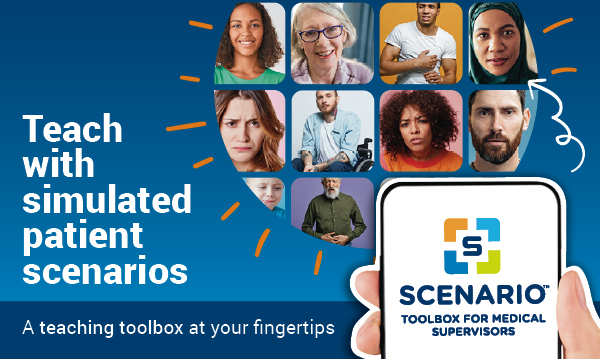
Scenario is a mobile App providing users with a library of challenging scenarios for engaging learning!

Perfect for educators and supervisors of medical students, junior doctors and GP trainees.

Click here for more information

ScenarioEd

This is a companion App to the Scenario App for learners including medical students, registrars and hospital doctors.

  • Interactive Learning
  • Collaborate with Peers
  • Broaden Your Knowledge
  • Prepare for Exams
  • Innovative learning environment

Click here for more information

GPSA Community App

Discover the all-new GPSA Community App! Stay connected and informed wherever you are.

  • Engage on Key Topics: Connect on teaching tips, best practices, and innovative ideas with peers.
  • Safe & Supportive: A secure platform for questions, advice, and meaningful conversations.
  • Peer Collaboration: Network and collaborate with like-minded professionals easily.
  • Stay Connected: Your community is just a tap away. Join discussions, stay updated, and never miss out.

Join us today!

Download the GPSA Community app from your favourite app store and transform the way you connect, share, and engage.

Apple App Store | Google Play Store

Games

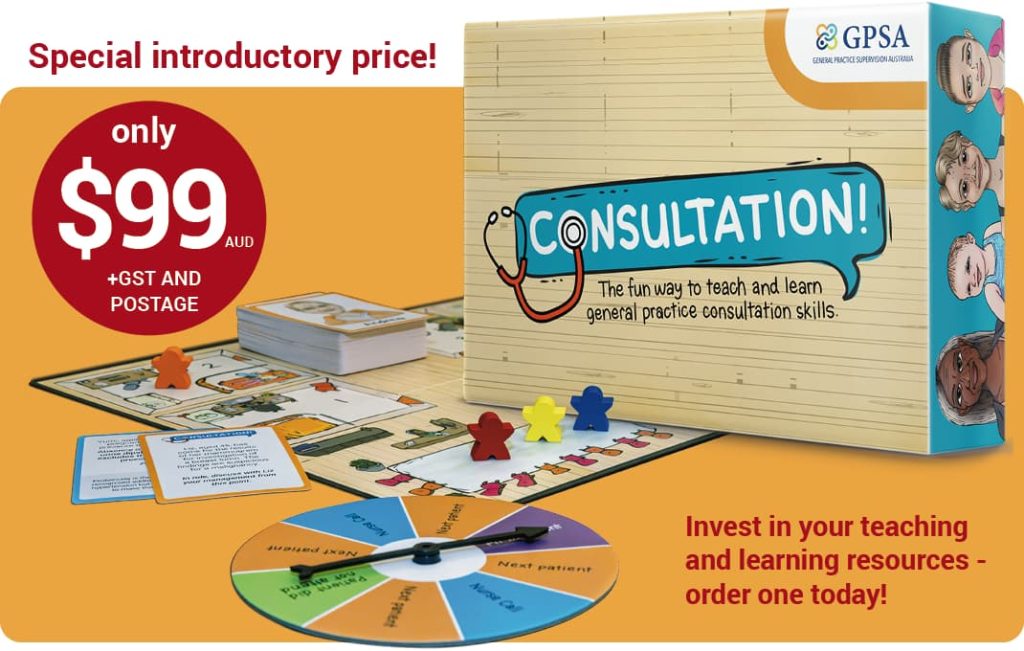
Consultation! The Board Game

Where learning is all fun and games! Designed for both learners and educators in the general practice setting, this game offers an engaging and interactive way to refine your consultation skills and clinical
knowledge.

Click here for more information

Clinical Reasoning: the game

Welcome to Clinical Reasoning: the game, the fun learning resource designed to help the medical student and GP in-Training to develop their reasoning skills in the clinical setting!

Play now online

Date reviewed: 11 December 2025

Please note that while reasonable care is taken to provide accurate information at the time of creation, we frequently update content and links as needed. If you identify any inconsistencies or broken links, please let us know by email.
This website uses cookies. Read our privacy policy.

Maximising the educational value of the ECTV FAQ

What is the ECTV?

External clinical teaching visits (ECTVs) are a key teaching and formative assessment method in Australian GP training. They are a highly valuable educational activity for registrars. As well, they act as a ‘second set of eyes’, and thus are an excellent way to review alignment between supervisor and training program assessments of a registrar’s progress.

What is Programmatic Assessment (PA) and Workplace-Based Assessments (WBA)?

ECTVs are a Workplace Based Assessment (WBA) activity and part of Programmatic Assessment. There has been a shift towards programmatic assessment in medical education, focussing on the importance of multiple low-stakes assessments throughout training, as opposed to a single high-stakes summative assessment at the end. WBA are core to PA, in authenticating learning and developing skills such as managing uncertainty and maintaining professionalism.

Is the purpose of the ECTV teaching or assessment?

ECTVs are designed as both a teaching and assessment method, but there is a potential conflict inherent in this which needs to be carefully managed.

How can the educational value of the ECTV be enhanced?

GPSA has developed a ‘How to…’ guide for supervisors on maximising the educational value of the ECTV. It covers five areas and is intended to be a practical guide. These areas include:

  • Planning for the visit
  • Interacting with the teaching visitor
  • Reviewing the ECTV report
  • Discussion with the registrar
  • Follow-up

Date reviewed: 13 November 2025

Please note that while reasonable care is taken to provide accurate information at the time of creation, we frequently update content and links as needed. If you identify any inconsistencies or broken links, please let us know by email.

This website uses cookies. Read our privacy policy.

Supporting and Training Registrars in Poorly Resourced Environments

How is it possible to effectively support and train registrars in poorly resourced environments?

To effectively support and train registrars in poorly resourced environments, RVTS has identified that addressing the registrar’s professional and non-professional needs is crucial. By considering the contexts of person, place, and program, a supportive environment can be created where registrars feel comfortable, confident, competent, and have a sense of belonging and bonding with peers. This promotes effective training in challenging settings.

The Remote Vocational Training Scheme (RVTS) uses distance education and remote supervision to deliver training without requiring registrars to leave their communities. This model has proven successful over 24 years, training more than 500 doctors in 350 communities. Almost 80% of participants achieve fellowship while providing an average of 5.2 years of service in their training location.

Three key take-home points:

  1. Training registrars in resource-poor environments involves more than providing remote supervision; a holistic professional support package must be in place for success.
  2. It’s not for everybody. Training in poorly resourced environments requires resilience and resourcefulness and is better suited to more experienced doctors.
  3. Family support as part of the training package is highly valued.

What strategies can be implemented to support registrars in poorly resourced environments?

RVTS has used multiple strategies over the years, each tailored to individual registrars and settings. However, the following have been important.

  • Regular Contact and Supervision: Frequent interactions with supervisors and medical educators through phone calls, emails, and visits ensure continuous support and guidance. RVTS employs a structured supervision schedule with initial frequent contacts tapering over time as registrars become more confident and experienced.
  • Flexible Approach: Adopting a flexible training approach to account for the varied situations faced by remote doctors is crucial. This involves tailoring supervision and support to meet individual needs and circumstances.
  • Face-to-Face Meetings: Organising regular face-to-face meetings to build group cohesiveness and update essential skills, especially in emergency medicine. RVTS schedules workshops twice a year, which also include social events to foster building a network and community.
  • Collegial and Peer Support: Encouraging peer interactions through weekly teletutorials, WhatsApp groups, and peer study groups, fostering a sense of belonging to a special group.
  • Family Support: Incorporating family support in the training package, such as enabling families to attend workshops, significantly contributes to retention and well-being.
  • Simple Technology Solutions: Using straightforward technology solutions such as phone, email, web-based resources, and Zoom/Teams meetings.to avoid the need for on-site technical support.

What is an evidence-based framework for supporting registrars in poorly resourced environments, and how can I apply it?

The University of Queensland recently undertook an evaluation of RVTS since its inception in 2000 and found evidence to support the effectiveness of RVTS ‘ efforts in training doctors in poorly resourced environments. This has informed the development of an evidence-based framework that includes:

  • Personalised Support: Tailored education and personal support from supervisors, many of whom are former registrars familiar with the local context. These supervisors serve as independent longitudinal mentors throughout the training, providing continuous, unbiased, and empathetic guidance that is relevant to the specific challenges faced by registrars.
  • The provision of holistic professional support that promotes comfort, confidence, competency, belonging, and professional bonding (the “3Cs and 2Bs”) among the registrars.
  • Continuity of Care: Provides consistent, quality care tailored to community needs in low-resource areas. This fosters…
  • Community Trust: Doctors’ longer tenure builds patient trust and deeper learning. RVTS Doctors spend an average of 5.2 years in the same practice, fostering stability.

To effectively apply this framework:

  • Consider the registrar as a whole person by recognising the educational and psychosocial needs of registrars.
  • Encourage registrars to stay in the same practice for stability and community integration.
  • Implement supervision models that ensure independent, structured, unbiased, and continuous support throughout training.
  • Tailor training to the registrar’s specific work environment.
  • Foster community building through social and professional networks.

Date reviewed: 23 October 2025

Please note that while reasonable care is taken to provide accurate information at the time of creation, we frequently update content and links as needed. If you identify any inconsistencies or broken links, please let us know by email.

This website uses cookies. Read our privacy policy.

Learner wellbeing and self-care

Learner wellbeing and self-care

The GP supervisor and broader supervision team has a key role in the prevention, early intervention and management of stress-related issues in the learner. Learner well-being should be explicitly addressed in the first week of the placement and monitored throughout.

Self-care

GPs also have a professional duty to monitor and support their own self-care and wellbeing. GP wellbeing is a shared responsibility among individuals, practices and the broader health system.

Date reviewed: 09 December 2025

Please note that while reasonable care is taken to provide accurate information at the time of creation, we frequently update content and links as needed. If you identify any inconsistencies or broken links, please let us know by email.

This website uses cookies. Read our privacy policy.

Patient Safety

Monitoring and maintaining patient safety is the most fundamental aspect of the GP supervisor’s role.


Clinical oversight

It is essential that the supervisor implement a model of clinical oversight that reflects the learner’s level of competence and ensures safe patient care. This requires early and ongoing assessment of performance, and a clear understanding of the nature and volume of patient encounters.

One of the key aspects to ensure patient safety it is important for the learner to be able to seek assistance from the supervisor about clinical care, either within or soon after the encounter. This can be facilitated by a clinical supervision plan.

Cultural safety

Another important element of safety is cultural safety, in particular for Aboriginal and/or Torres Strait Islander patients. Cultural safety has been defined as ‘overcoming the power imbalances of places, people and policies that occur between the majority non-Indigenous position and the minority Aboriginal and Torres Strait Islander person so that there is no assault, challenge or denial of the Aboriginal and Torres Strait Islander person’s identity, of who they are and what they need’ (Closing the Gap, 2025). Supervisors have a responsibility to ensure that their patients are receiving culturally safe care by all providers, including learners in the practice.


Date reviewed: 05 November 2025

Please note that while reasonable care is taken to provide accurate information at the time of creation, we frequently update content and links as needed. If you identify any inconsistencies or broken links, please let us know by email.

This website uses cookies. Read our privacy policy.

Clinical Reasoning

One of the most important aspects of the role of the GP supervisor is to help develop the learner’s clinical reasoning skills.

Clinical reasoning is the process of making sense of the clinical and contextual information regarding a patient’s presentation in order to determine the best plan of management. It requires the ability to gather and integrate various sources of information, to weigh evidence, manage uncertainty and to reflect upon the process used to reach the diagnosis and make a management plan.

Sound clinical reasoning is fundamental to safe and effective general practice. While development of clinical reasoning skills is partly based on accumulation of experience, it is also a skill that can be taught. GP supervisors therefore play a vital role in teaching their learners to reason effectively.

Webinar: ‘Gimme one reason’ – a guided tour of the hidden kingdom of clinical reasoning

At the end of this session, the supervisor will be able to:

  • discuss concepts of clinical reasoning and understand the process of ‘how doctors think’
  • describe common cognitive biases
  • use effective teaching and learning strategies and resources to develop clinical reasoning skills in their registrars

Date reviewed: 22 October 2025

Please note that while reasonable care is taken to provide accurate information at the time of creation, we frequently update content and links as needed. If you identify any inconsistencies or broken links, please let us know by email.

This website uses cookies. Read our privacy policy.

How can GP supervisors better facilitate reflective practice in their registrars?

What is reflective practice?

‘The aim of all supervision and feedback is to make learners reflect on their practice’.

Clinical practice is far from straightforward. GPs practice complex competencies in a clinical world rich with uncertainty and where the textbook knowledge only provides some of the answers. Clinical decision-making therefore requires GPs to combine experience-based knowledge with evidence-based knowledge, but also to constructively process both formal and informal feedback.

The ability to reflect is necessary for efficient use of feedback and essential when performing complex competencies in practice. It has been argued that the ability to reflect on one’s own role and performance is the key factor in expertise development – indeed, that the aim of all supervision and feedback should be to facilitate the learner’s reflection on their own practice.

What is the difference between ‘clarifying supervision’ and ‘expanding supervision’?

‘Clarifying supervision’ is based on direct instruction and confirmation of a decision, whereas ‘expanding’ or ‘broadening supervision seeks to generate reflection through questions that create ‘productive struggle’, link knowledge with practice, or broaden the case. The nature of the registrar and situation may determine which type of supervision is most appropriate, but expanding supervision allows for significantly greater reflection and professional development.

How do I enhance reflection?  Asking good questions is the key. For example:

  • What are your considerations?
  • Why did you choose… (to give an ACE/these tests)?
  • Why do you think she seeks the doctor just now?
  • Is this normal for… (people at that age)?
  • Did you ask about… (symptoms/concerns)?
  • Is that a high ALAT value?
  • What could have made you choose to refer the patient?
  • How does this situation differ from..
  • What if… (the patient had a fever)
  • Would it affect your decision if you knew that…?
  • What would be the next step?
  • What would be your second choice in case of side effects?
  • What else could it be?

Reflective questions can be used at all times of case discussion, even in the brief corridor consultation.

It is important to not ‘examine’ the registrar and make them feel uncomfortable.

  • Time
  • Registrar preparation
  • Choosing the right material (e.g. patient case)
  • Thinking about what they need your help with
  • 40-20-40 model (40% of the learning happens before the session (preparation) and 40% afterwards (implementation))

How can we assess reflection? What is the GAR tool?

Some competencies require discussions broader than a series of patient cases. It is important to assess reflection because of its link to good clinical practice. A new tool has been developed called the Global Assessment of Reflection Ability (GAR) (Lillevang et al. BMC Medical Education (2020) 20:352).
The GAR is a tool for formative and summative assessment of the ability to reflect. It works in two parts.

Part 1 – Preparation:

This begins with the trainee presenting his/her mind map/written presentation which then is the basis for a structured discussion between trainer and trainee that includes references to the concrete experience that the trainee has had.

Part 2 – Structured discussion:

The trainee produces a mind map or similar written presentation in a concept formation process addressing a concrete, complex competency. The trainee is given 1-2 weeks for the preparation and uses the description of the competency in the curriculum.

During the discussion the trainer assesses the following:

  • Does the trainee show ability to reflect on the problem/competency and on his/her own role as a GP according to the matter?
  • Does the trainee demonstrate relevant analytical skills concerning the problem/competency?
  • Is the trainee able to participate in an open-minded dialogue and demonstrate relevant flexibility?

The focus of the discussion is on formative aspects leading to a plan for further learning, but it also includes a summative assessment of whether the competency is successfully achieved.

What are the three most important take away points?

  1. The aim of all supervision and feedback is to make learners reflect on their practice
  2. Reflection is facilitated by asking good questions
  3. Preparation by the registrar (where able) significantly enhances learning

Date reviewed: 23 October 2025

Please note that while reasonable care is taken to provide accurate information at the time of creation, we frequently update content and links as needed. If you identify any inconsistencies or broken links, please let us know by email.

This website uses cookies. Read our privacy policy.