

Resources Supervision

Topical Teaching

Saving Supervisors Time with Smart Resources! 

Health Awareness Days

We’ve paired GPSA resources with key health awareness days to help simplify your planning and enhance your teaching sessions with registrars. 

Use these resources to create engaging, topical sessions that cover a wide range of subjects. Whether you’re working with medical students or registrars, these tools will help you deliver relevant, impactful lessons.

Save time on planning and make your teaching more efficient today! Check out our Health Awareness Day resources now! 

Date reviewed: 16 January 2026

Please note that while reasonable care is taken to provide accurate information at the time of creation, we frequently update content and links as needed. If you identify any inconsistencies or broken links, please let us know by email.

This website uses cookies. Read our privacy policy.
Resources Supervision

Teaching Plan: Long-acting reversible contraception (LARC)

This teaching plan has been developed to assist GP supervisors in guiding general practice registrars through the essential knowledge and clinical competencies related to Long-Acting Reversible Contraception.

For convenience, you can read through this resource here, or use the pdf tools at the top of the document to download and / or print the file. 

Date reviewed: 13 November 2025

Please note that while reasonable care is taken to provide accurate information at the time of creation, we frequently update content and links as needed. If you identify any inconsistencies or broken links, please let us know by email.

This website uses cookies. Read our privacy policy.
Resources Supervision

How to: Support Best Practice Use of AI Scribes

This GPSA resource, How to Support Best Practice Use of AI Scribes, provides a practical framework to guide supervisors and registrars in the safe and effective use of AI-powered clinical documentation tools in general practice. Using an ‘Ask, Assess, Advise’ model, it addresses the opportunities and risks associated with AI scribes, including legal, ethical, and educational considerations.

Date reviewed: 13 November 2025

Please note that while reasonable care is taken to provide accurate information at the time of creation, we frequently update content and links as needed. If you identify any inconsistencies or broken links, please let us know by email.

This website uses cookies. Read our privacy policy.
Resources Supervision

FAQ: How to Teach a Procedural Skill

Why is it important to teach procedural skills in general practice?

Procedural skills are an essential part of general practice, particularly in rural and remote settings. Teaching these skills helps maintain a broader scope of care, supports registrar confidence, and ensures patient access to timely procedures.

What is the difference between teaching procedural and other skills?

The major difference between a procedural skill and a communication (or interview) skill is that it is assigned to “muscle memory” and does not require conscious thought except at key steps. Because of this, supervisors often have difficulty identifying how they learnt a procedural skill in order to teach it to others regardless of how expert they are at that particular procedure.

What are the three key stages of learning motor skills?

Fitz and Posner identified three key stages of learning motor skills:

  • Cognitive – when movements are being learnt they are slow and clumsy due to being consciously controlled.
  • Associative stage – some of the movements are automatic and fluid but others require executive oversight and are slow and jerky.
  • Autonomous stage – Fluid, accurate and fast movements.

What is the first step in teaching a procedural skill?

The breakdown of a procedural skill can be achieved by task analysis in which the supervisor:

  • Visualises the procedure
  • Writes down the key steps
    • Motor skills (what the hands do)
    • Cognitive steps (what the mind must consider)
    • Decision-making points (critical judgments or pitfalls)
  • Reconstructs the task and see if anything is missing

This becomes the foundation for teaching, feedback, and assessment.

A competency checklist lists all the key steps and can be used as an assessment tool. For example,
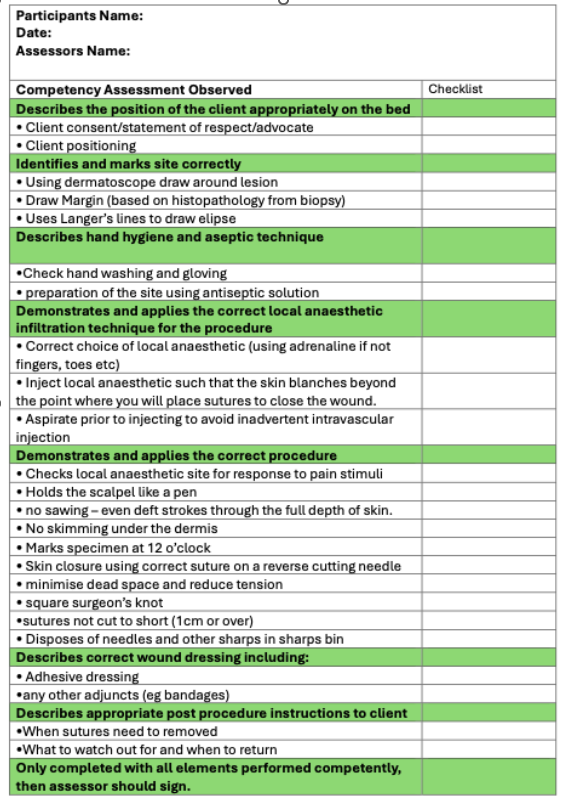
A modified Peytons method can then be applied to the teaching process which is a advance on the “see one, do one teach one” philosophy often used in medicine.

  • Demonstration. This involves the facilitator demonstrating the skill in real time without any explanation or commentary.
  • Deconstruction. The facilitator performs the procedure again, this time breaking in down into sub-steps and explaining each step.
  • Comprehension. In this step, the facilitator asks the participant to explain the procedure to the facilitator and the facilitator performs the procedure following the participants instructions.
  • Performance. In the final step, the participant performs the procedure on their own without coaching or guidance by the facilitator.
  • Error correction – verbal guidance increases cognitive load but it is important that any errors identified in skills are corrected as they occur
  • Incorporate visual aids, simulation, and checklists where appropriate.

Break the skill into small, digestible components. Avoid overloading registrars with too much feedback at once. Focus on one or two key points per session and offer timely, concise feedback.

Use your task analysis to build a competency checklist. This allows you to:

  • Objectively assess performance
  • Identify knowledge gaps
  • Ensure consistency in teaching and evaluation

Registrars should demonstrate conscious competence before unsupervised practice.

Deliberate practice involves intentional, repetitive performance of a task with immediate feedback and supervision. It’s essential for:

  • Consolidating skills into long-term memory
  • Transitioning to unconscious competence
  • Maintaining procedural confidence over time

Plan regular practice sessions, even after initial competence is achieved.

Explore underlying reasons—cultural, emotional, or confidence-based. Create a safe learning environment, provide non-judgmental debriefing, and consider alternative approaches like:

  • Simulation or models
  • Peer discussion or yarning circles
  • Reframing the procedure’s purpose or patient benefit

Ensure registrars understand the importance of:

  • Informed consent (explain risks/benefits, gain genuine agreement)
  • Respectful communication (put the patient at ease)
  • Post-procedure care (follow-up, aftercare instructions, recall systems)

These non-technical skills are as vital as the procedure itself.

Refresh your skills using:

  • Peer review or mentorship
  • Simulation or workshops
  • High-quality procedural videos (YouTube, vetted medical channels)

It’s okay to learn alongside your registrar—and it models good professional behaviour.

Yes. While often associated with surgical or invasive tasks, any procedural or physical skill—from PR exams to wound care or contraceptive insertion—can and should be taught using a structured, stepwise, patient-centred approach.

  • Task analysis worksheets
  • Checklists based on skill steps
  • DOPS (Direct Observation of Procedural Skills) forms
  • Simulation models
  • Visual aids and diagrams
  • Trusted online video tutorials

Remember: You are unconsciously competent. To teach well, slow down, unpack each step, and build the procedure from the ground up. Be the bridge from “not yet” to “I’ve got this.”

  • Benner, P. (1982). From Novice to Expert. The American Journal of Nursing, 82(3), 402–407.
  • Bing-You, R., Hayes, V., Varaklis, K., Trowbridge, R.,
  • Kemp, H., & McKelvy, D. (2017). Feedback for Learners in Medical Education: What Is Known? A Scoping Review. Academic Medicine, 92(9), 1346–1354.
  • Bosse, H. M., Mohr, J., Buss, B., Krautter, M., Weyrich, P., Herzog, W., Jünger, J., & Nikendei, C. (2015). The benefit of repetitive skills training and frequency of expert feedback in the early acquisition of procedural skills. BMC Medical Education, 15(1), 22–22.
  • Burgess, A., van Diggele, C., Roberts, C., & Mellis, C. (2020). Tips for teaching procedural skills. BMC Medical Education, 20(Suppl 2), 458–458.
  • Dreyfus, S. E., & Dreyfus, H. L. (1980). A five-stage model of the mental activities involved in directed skill acquisition. Distribution 22.
  • Ericsson, K. (2008). Deliberate Practice and Acquisition of Expert Performance: A General Overview. Academic Emergency Medicine, 15(11), 988–994.
  • Frank, J. R., Snell, L. S., Cate, O. T., Holmboe, E. S., Carraccio, C., Swing, S. R., Harris, P., Glasgow, N. J., Campbell, C., Dath, D., Harden, R. M., Iobst, W., Long, D. M., Mungroo, R., Richardson, D. L., Sherbino, J., Persky, A. M., & Robinson, J. D. (2017). Moving from Novice to Expertise and Its Implications for Instruction. American Journal of Pharmaceutical Education, 81(9), 6065–6080.
  • Johnson, J., Ahluwalia, S. Neurodiversity in the healthcare profession, Postgraduate Medical Journal, Volume 101, Issue 1192, February 2025, Pages 167–171
    Peyton JWR (1999). The learning cycle. In: Peyton JWR, editor. Teaching and learning in medical practice. Rickmansworth: Manticore Europe Ltd; p. 13–9.
  • Quinn, A., Falvo, L., Ford, T., Kennedy, S., Kaminsky, J., & Messman, A. (2021). Curated collections for educators: Six key papers on teaching procedural skills. AEM Education and Training, 5(4), e10692-n/a.
  • Sawyer, T., White, M., Zaveri, P., Chang, T., Ades, A., French, H., Anderson, J., Auerbach, M., Johnston, L., & Kessler, D. (2015). Learn, See, Practice, Prove, Do, Maintain: An Evidence-Based Pedagogical Framework for Procedural Skill Training in Medicine. Academic Medicine, 90(8), 1025–1033.
  • Schnotz, W. (2010). Reanalyzing the expertise reversal effect. Instructional Science, 38(3), 315–323.
    Silver, I., Taber, S., Talbot, M., & Harris, K. A. (2010). Competency-based medical education: theory to practice. Medical Teacher, 32(8), 638–645.
  • Telio, S., Ajjawi, R., & Regehr, G. (2015). The “Educational Alliance” as a Framework for Reconceptualizing Feedback in Medical Education. Academic Medicine, 90(5), 609–614.
    Tremblay, M., Rethans, J., & Dolmans, D. (2023). Task complexity and cognitive load in simulation‐based education: A randomised trial. Medical Education, 57(2), 161–169.
  • van Merrienboer, J. J. G., & Sweller, J. (2010). Cognitive load theory in health professional education: design principles and strategies. Medical Education, 44(1), 85–93.
  • Weallans, J., Roberts, C., Hamilton, S., & Parker, S. (2022). Guidance for providing effective feedback in clinical supervision in postgraduate medical education: a systematic review. Postgraduate Medical Journal, 98(1156), 138–149.
  • Wearne, S., Australian Family Physician (2011) Vol. 40, 63-67

Date reviewed: 02 February 2026

Please note that while reasonable care is taken to provide accurate information at the time of creation, we frequently update content and links as needed. If you identify any inconsistencies or broken links, please let us know by email.

This website uses cookies. Read our privacy policy.
Resources Supervision

Teaching Plan: Child Mental Health and Wellbeing

This teaching plan focuses on the topic of child mental health and wellbeing. The plan is designed to support GP registrars in their work with children aged 0-12 and their families and describes a range of evidence-informed strategies and tools.

Date reviewed: 22 October 2025

Please note that while reasonable care is taken to provide accurate information at the time of creation, we frequently update content and links as needed. If you identify any inconsistencies or broken links, please let us know by email.

This website uses cookies. Read our privacy policy.
Resources Supervision

FAQ: Rational Test Ordering

What is rational test ordering?

Rational test ordering refers to the thoughtful, evidence-based, and patient-centered use of investigations (both pathology and imaging). It aims to strike a balance between under-testing (risking missed diagnoses) and over-testing (leading to harm, stress, and unnecessary follow-ups).

Over-testing is common, with studies suggesting up to 50–75% of tests may be unnecessary.

Why is it important in general practice?

  • Rational test ordering:
  • Minimises unnecessary testing
  • Reduces harm from false positives
  • Preserves healthcare resources
  • Improves diagnostic accuracy

What are the harms of over-testing?

  • False positives and cascade testing
  • Increased patient anxiety
  • Physical harm from invasive follow-up procedures
  • Overdiagnosis and unnecessary treatment
  • Waste of time and healthcare resources
  • Cognitive burden on clinicians

How can over-testing specifically harm patients?

  • Psychological stress from incidental findings
  • Physical complications (e.g., biopsy-related bleeding)
  • Unnecessary referrals and interventions
  • Mislabelling with disease and long-term consequences
  • Diversion of attention from more meaningful clinical care
  • Defensive medicine and fear of missing a diagnosis
  • Patient expectations or demands
  • Time pressures and shortcuts
  • Clinical inexperience and uncertainty
  • Habitual hospital-based test ordering
  • Cognitive biases (e.g., availability bias)
  • System factors like ease of access and lack of oversight
  • Absolutely. Overuse of imaging (e.g., unnecessary MRIs or CTs) can lead to incidentalomas, costly follow-up, and unnecessary anxiety—without improving outcomes.

    No. Rational testing isn’t about doing fewer tests; it’s about testing with intention and purpose. Every test ordered should have a clear rationale and a potential to influence clinical management.

    It’s the optimal point between too few and too many tests—where clinical safety, efficiency, and patient-centered care intersect. The goal is to use clinical judgment and evidence to decide what is truly necessary.

    Yes. Common examples include:
  • Inflammatory markers (CRP/ESR) for vague symptoms like fatigue
  • Thyroid function tests in asymptomatic individuals or as routine annual screens
  • ANA without a clear indication of autoimmune disease
  • Shoulder ultrasounds in older adults
    • Prioritise history and physical examination
    • Use the ‘investigation pause’: Ask yourself, “Will this change my management?”
    • Avoid batch testing or shotgun panels
    • Start with serial testing—add on only when needed
    • Use validated guidelines and tools (e.g., HealthPathways, RCPA Manual)
    • Educate patients on the risks of over-testing

    Inbox review is a teaching tool where supervisors and registrars review recent test results together. They reflect on:

    • Why the test was ordered
    • Whether it changed management
    • Any unintended consequences It promotes critical thinking, insight, and habit change.
  • Explain your own decision-making during consults
  • Encourage open discussion around uncertainty
  • Challenge unnecessary test choices constructively
  • Share resources and tools to guide evidence-based testing
  • Show that not testing is sometimes the safer option
  • Consumer-driven healthcare, online testing services, and sensational media stories (e.g., TV health check segments) increase patient demand for unnecessary testing. Patients may present with privately ordered results, creating additional clinical burden.

    Use shared decision-making. Example:
    “We could do a bunch of tests, but based on what you’ve told me and your exam, I don’t think they’ll help us. Let’s monitor things and revisit if anything changes.” This builds trust and reassures patients that clinical decisions are thoughtful and safe.

    • Normalise uncertainty—medicine isn’t black-and-white
    • Help registrars articulate their thinking
    • Use real examples (especially ones with unintended consequences)
    • Encourage curiosity and evidence-seeking

    Date reviewed: 13 November 2025

    Please note that while reasonable care is taken to provide accurate information at the time of creation, we frequently update content and links as needed. If you identify any inconsistencies or broken links, please let us know by email.

    This website uses cookies. Read our privacy policy.
    Resources Supervision

    FAQ: Minimising diagnostic error – strategies to support your registrar

    What is the “trifecta” of skills?

    The “trifecta” refers to the interconnectedness of clinical reasoning, the management of uncertainty, and the reduction of diagnostic error. Good reasoning and effective management of uncertainty lead to fewer errors.

    Will the discussion cover how to manage errors after they occur?

    No, the discussion will not focus on the management of errors after they have occurred. However, it will emphasise the importance of open discussions about errors as learning opportunities and point to resources like Medical Defence Organisation Fact Sheets.

    What is diagnostic error?

    Diagnostic error involves both failing to establish an accurate and timely diagnosis and failing to communicate that explanation effectively to the patient.

    How common is diagnostic error in medical practice?

    Diagnostic error is a significant issue, accounting for a substantial portion (around a third) of medical claims.

    How can case studies be used in teaching registrars?

    Case studies provide practical examples for registrars to analyse clinical reasoning, identify potential errors, and discuss strategies for improvement.

     Supervisors can:

    • Facilitate discussions about clinical reasoning and diagnostic error.
    • Use case studies to analyse decision-making.
    • Encourage reflection on clinical encounters.
    • Provide feedback on performance.
    • Create a safe environment for discussing errors and uncertainty.

    The main categories are:

  • Presentation factors (how the illness presents)
  • Undifferentiated illness (early, vague symptoms)
  • Atypical presentations of common diseases
  • Rare conditions
  • Patient factors
  • Difficulty communicating
  • Complex medical histories
  • Non-compliance with investigations or treatment
  • Self-labeling or misattributing symptoms
  • Inadequate follow-up.
  • Patient delays in seeking further care.
  • Doctor factors
  • Lack of knowledge or experience
  • Cognitive biases (e.g., confirmation bias, overconfidence bias)
  • Communication barriers
  • Time pressure and fatigue
  • “HALT” factors (Hungry, Angry, Late, Tired) System factors
  • Issues with appointment scheduling and access
  • Inadequate record-keeping systems
  • Lack of follow-up and recall systems
  • Walk-in or urgent care settings that disrupt continuity of care
  • No, diagnostic errors often result from a combination of factors. The “Swiss cheese model” illustrates how multiple factors can align to create an opportunity for error.

    Cognitive biases are flawed thinking patterns that can lead to errors in judgment and decision-making.

    • Confirmation bias: Seeking or interpreting information that confirms existing beliefs.
    • Overconfidence bias: Overestimating one’s own knowledge or abilities.
    • Availability heuristic: Overemphasizing recent or memorable cases.
    • Anchoring bias: Fixating on initial information and failing to adjust appropriately.
    • Awareness: Recognizing and acknowledging one’s own biases.
    • Metacognition: Thinking about one’s own thinking process.
    • Seeking diverse perspectives: Consulting with colleagues or considering alternative explanations.
    • Using decision support tools: Checklists, guidelines, and algorithms can help mitigate bias.

    The diagnostic pause is a brief period during the consultation where the clinician intentionally stops to reflect on the case, consider potential diagnoses, and plan the next steps.

    It allows the clinician to:

    • Organise their thoughts.
    • Identify potential biases.
    • Consider alternative diagnoses.
    • Avoid premature closure.
    • Formulate a safe and effective management plan.

    Clinicians can:

    • Take a few moments to think and make notes.
    • Use phrases like, “Let me just think about this for a moment.”
    • Explain to the patient that they are taking time to consider the case carefully.

    ICE stands for Ideas, Concerns, and Expectations. These questions help explore the patient’s perspective:

    • Ideas: What do you think might be causing your symptoms?
    • Concerns: What are you most worried about?
    • Expectations: What are you hoping we can achieve today?

    Rational test ordering involves selecting investigations that are most likely to benefit the patient while minimizing harm and unnecessary costs.

    Resources include:

    • Clinical guidelines (e.g., Therapeutic Guidelines, Health Pathways)
    • The BMJ paper on how GPs diagnose
    • The RACGP Clinical Reasoning Guide

    Gut feelings are intuitive senses of unease or concern about a patient. They can be valuable signals that warrant further investigation or attention.

    These include:
  • Thorough history and examination.
  • Appropriate use of investigations.
  • Seeking second opinions.
  • Open communication with patients.
  • Reflective practice.
  • Seeking help from colleagues or specialists.
  • Using checklists.
  • Effective communication with patients.
  • Utilising recall and reminder systems.
  • Keeping a personal notebook for tracking patients.
  • Employing safety netting techniques.
  • AI has the potential to assist with tasks like documentation and data analysis. However, there are concerns about its impact on clinical reasoning and the potential for bias. The RACGP recommends against using AI scribes for GPT1 registrars.

    Date reviewed: 25 October 2025

    Please note that while reasonable care is taken to provide accurate information at the time of creation, we frequently update content and links as needed. If you identify any inconsistencies or broken links, please let us know by email.

    This website uses cookies. Read our privacy policy.
    Resources Supervision

    Supervision resources for all types of learners


    There are a number of areas of knowledge and skills that apply to learners in general practice at all levels. By exploring the options on this page, you will find a range of evidence-based, best practice educational tools and resources to support you in your supervision role: regardless of whether you primarily teach medical students, prevocational doctors or vocational trainees.

    For clinical resources click here 

    For our different types of resources, please click on the relevant tab below:

    Clinical Topics CatalogueCatalogue
    Addiction medicineWebinar
    ADHD – helping your registrar deliver best practice careWebinar, FAQ and Podcast
    Advanced care planningWebinar, FAQ and Podcast
    Behavioural issues in childrenWebinar, FAQ and Podcast
    Child mental healthWebinar and Podcast
    Chronic painWebinar and Podcast
    Common infections part 1Webinar, FAQ and Podcast
    Common infections part 2Webinar, FAQ and Podcast
    ContraceptionWebinar, FAQ and Podcast
    Depression in Young PeopleWebinar and FAQ
    DermatologyWebinar, FAQ and Podcast
    DementiaWebinar 1, and 2, FAQ and Podcast Part 1 and Part 2
    Disability careWebinar, FAQ and Podcast
    EndometriosisWebinar and FAQ
    HIVWebinar, FAQ and Podcast
    LGBTQIA+ inclusive healthcareWebinar, FAQ and Podcast
    Long COVIDWebinar, FAQ and Podcast
    Managing patients with a history of childhood traumaWebinar, FAQ and Podcast
    Men’s healthWebinar, FAQ and Podcast
    Mental health top tipsWebinar and FAQ
    Overweight and obesityWebinar, FAQ and Podcast
    Prenatal screeningWebinar, FAQ and Podcast
    RACF careWebinar, FAQ and Podcast
    STIsWebinar, FAQ and Podcast
    Veteran’s healthWebinar, FAQ and Podcast
    Women's Health: LARC, EMA and the AusCAPPS NetworKhref="https://open.spotify.com/episode/6CD9SXNvFPfDzxQ4mDv6Lh?si=4G21gG7DQq6RkHeZytqsTA">Podcast
    Workers compensationWebinar and Podcast
    Assessing your registrar's Telehealth consultationsWebinar and FAQ
    Behaviour change approaches for smoking cessation in general practiceWebinar part 1, Part 2 and Podcast part 1, Part 2
    Clinical ReasoningWebinar
    Consultation analysis and feedback
    Webinar, FAQ and Podcast
    Helping your registrar manage challenging patients Part 1Webinar, Podcast and Resources
    Helping your registrar manage challenging patients Part 2Webinar, Podcast and Resources
    Managing UncertaintyWebinar and Podcast
    Patient BoundariesWebinar, FAQ and Podcast
    Rational test ordering - helping your registrar find the 'sweet spot'Webinar, Podcast and FAQ
    Teaching Consultation Skills
    Webinar, FAQ and Podcast
    Teaching Professional and Ethical PracticeWebinar, FAQ and Podcast
    What is motivational interviewing? Behaviour change approaches for smoking cessation in general practice​Webinar and Podcast
    Best Practice Aboriginal and Torres Strait Islander Health - Part 1Webinar and Podcast
    Best practice Aboriginal and Torres Strait Islander health - Part 2Webinar and Podcast
    Clinical yarningWebinar and Podcast
    Closing the gap in Aboriginal and Torres Strait Islander health disparityWebinar and Podcast
    Culturally Safe GP registrar supervision – decolonisation and a strengths-based approachWebinar and Podcast
    Teaching Yourself and Your Registrar About Aboriginal and Torres Strait Islander HealthFAQ
    Telehealth and Aboriginal and Torres Strait Islander patientsWebinar and FAQ
    Telehealth with Aboriginal patients who are hard of hearingFAQ
    Best practice GP supervision – a guided tour of GPSA resourcesWebinar and Podcast
    Best practice supervision – a refresherWebinar and Podcast
    Clinical Supervision – Keeping Your Registrar Safe and SupportedWebinar, Resources
    Improve safety with a ‘call for help’ listWebinar, FAQ and Podcast
    Introduction to GP supervision – roles, responsibilities and rewardsWebinar and FAQ
    Managing patient complaints in general practice training – through an educational, personal and medicolegal lensWebinar (please login to the GPSA community portal to view)
    Orientation to GP supervision for women supervisorsWebinar, Podcast and Web Page
    Alone: General PracticeWebinar, Podcast and Article
    Are they safe in there – clinical supervision and RCAWebinar, FAQ and Podcast
    Teaching and Learning Priorities in the First Weeks of General PracticeWebinar, Podcast and Resources
    The Start of the Training Term - Tips and Resources to Make the Road Less BumpyWebinar and Podcast
    The (Not So) Simple ConsultationWebinar and Podcast
    Transition to general practice: the "General Practice Survival Kit".Webinar and Podcast
    Empowering Neurodivergent RegistrarsWebinar, Podcast and FAQ
    Supporting the International Medical Graduate (IMG) GP Registrar
    Webinar and Podcast
    ACRRM Training and Supervision UpdateWebinar and Podcast
    Remote supervision – better access to care for rural and remote communitiesWebinar and Podcast
    Training in Poorly Resourced EnvironmentsWebinar, Podcast and FAQ
    Ad hoc supervision and informal teachingWebinar, FAQ and Podcast
    Effective use of HealthPathways in clinical practice and GP trainingWebinar, Podcast and FAQ
    How can GP supervisors better facilitate reflective practice in their registrars?Webinar, Podcast and FAQ
    How to Teach Procedural SkillsWebinar, Podcast and FAQ
    Learning planningWebinar and FAQ
    Making the most of in-practice teaching: tailoring learning for GP registrarsWebinar, and Podcast
    Maximising the educational value of the ECTVWebinar, and Podcast
    Minimising diagnostic error – strategies to support your registrarWebinar, Podcast and FAQ
    Observing your registrar – refining your skillsWebinar, FAQ and Podcast
    Problem Case Discussion - As Easy As PQRSTWebinar and Podcast
    Study skillsWebinar and Podcast
    Supporting Your Registrar To Practice Evidence Based MedicineWebinar and Podcast
    Teaching and learning in general practiceWebinar and Podcast
    Teaching the Business of Being a GPWebinar and Podcast
    Video-consultation review for teaching and learning - the state of playWebinar and Podcast
    Consultation analysis and feedbackWebinar, FAQ and Podcast
    Early Identification of the Registrar in DifficultyWebinar and Podcast
    How to give feedback the DR STABLE WayWebinar and Podcast

    Date reviewed: 26 February 2026

    Please note that while reasonable care is taken to provide accurate information at the time of creation, we frequently update content and links as needed. If you identify any inconsistencies or broken links, please let us know by email.

    This website uses cookies. Read our privacy policy.
    Resources Supervision

    Teaching Plan: Abnormal Liver Function Tests

    This teaching plan focuses on how to approach and interpret abnormal liver function test results in general practice. It provides guidance for effective assessment, including identifying causes and planning appropriate management strategies for patients.

    Date reviewed: 21 October 2025

    Please note that while reasonable care is taken to provide accurate information at the time of creation, we frequently update content and links as needed. If you identify any inconsistencies or broken links, please let us know by email.

    This website uses cookies. Read our privacy policy.
    Resources Supervision

    FAQ: Effective use of HealthPathways
    in clinical practice and GP training

    WHAT IS HEALTHPATHWAYS?
    HealthPathways offers clinicians locally agreed information to support clinical decision-making at the point of care. It integrates clinical guidance, service and referral options, and patient resources into a single platform tailored for specific local contexts. It is a useful resource for clinical practice and GP training, and enables reflective learning, quality improvement and audit.

    HOW ARE THE PATHWAYS DEVELOPED?
    Community HealthPathways is developed by GPs and primary care clinicians for general practice teams. Local GP or primary care clinical editors collaborate with specialists, subject matter experts, and health system and community stakeholders to create and regularly update pathways to ensure they are practical, reflect local reality, and are evidence-based.

    Local clinical editors adapt pathways to regional contexts, aligning them with referral criteria, healthcare system processes, and regional services.

    Localised pathways are updated regularly. Urgent changes are flagged with “clinical editor notes” until formal reviews are completed.

    WHO FUNDS AND RUNS HEALTHPATHWAYS?
    In Australia, depending on the area, HealthPathways is funded and supported by state services, the Commonwealth-funded Primary Health Networks (PHNs), or a collaboration of the two. In New Zealand, it is funded and supported by Health New Zealand | Te Whatu Ora.

    Streamliners host the platform, partnering with and bringing together HealthPathways Community members in Australia, New Zealand, the UK, and Canada.

    Pathways can be shared across the community where appropriate, then customised for local care. Some regions also use hospital-specific pathways, Hospital HealthPathways.

    1. Clinical Pathways: Assessment, management, and referral guidance for conditions. It includes both presentation-based pathways for undifferentiated conditions e.g. headaches or eye problems in children, alongside condition-based pathways e.g. diabetes.
    2. Request Pathways: Information for access and referral to local services.
    3. Resource Pages: Supplementary materials, including medication guides, infection control protocols, and health system information e.g. MBS claim.

    Patient information, such as handouts or credible website links, is embedded into pathways to enhance consultations. This is also available at the bottom of the pathways in the patient information section.

    HealthPathways provides structured guidance for consultations, refining differential diagnosis, managing rare conditions, curated resources, and insights into the local health system. It helps GPs know local, “how things are done around here” information.

    Supervisors can use it for teaching and reflective learning and to identify knowledge gaps. It can support audit and quality improvement.

    Information, services and resources for diverse populations, such as interpreter services and community support, enable more equitable care.

    Use the “Feedback” button at the bottom right of any page to report issues, suggest improvements, or engage with your local HealthPathways team, including GP colleagues.

    They can integrate it into teaching sessions, model its use during case discussions, and encourage registrars to access it regularly.

    HealthPathways supports learning and is embedded in GP training to prepare trainees for assessments like the Fellowship exams.

    This creates a teaching opportunity to discuss new information with supervisors, evaluate its relevance, and explore its application.

    Understanding what resources registrars use, and how they are using them, ensures that registrars are relying on credible tools and using them effectively. It also allows supervisors to align teaching with those resources.

    Patients benefit from high-quality, understandable information, evidence-based practices, and streamlined referrals.

    A search tip is to use the “Expand All” option or Ctrl+F to find terms within a pathway.

    AI assisted Smart Search allows you to navigate directly to the location on the pathway that contains the information you require. This new feature is being progressively released and will be available on all HealthPathways sites by mid-2025.

    No, it complements clinical judgement and supports individualised decision-making while enhancing patient care.

    Unlike general guidelines, it is tailored to GPs, integrating evidence-based recommendations with local healthcare requirements. Unlike some resources available on the internet, there is robust clinical governance over content.

    It provides transparency about what information is needed for a quality referral, increasing the chance of acceptance. It also explains the referral and access criteria within the limitations of a public health system.

    Sharing its benefits, demonstrating its use, and promoting frequent reference can encourage adoption.

    It enables knowledge sharing and collective improvement through user feedback and updates.

    Yes, the CPD reporting feature allows you to log reflective notes on pathway usage, fostering integration of reflective learning into practice. Your personal data is confidential and not shared with anyone. This feature is being progressively released and will be available on all sites by mid-2025.

    Pathways also make a useful basis for an audit of your practice and for practice improvement activities.

    healthpathwayscommunity.org/Home/Access-to-HealthPathways

    HealthPathways is free for clinicians to use.

    Date reviewed: 23 October 2025

    Please note that while reasonable care is taken to provide accurate information at the time of creation, we frequently update content and links as needed. If you identify any inconsistencies or broken links, please let us know by email.

    This website uses cookies. Read our privacy policy.