Teaching, Learningm Assessment and Feedback

FAQ: How to Teach a Procedural Skill

Why is it important to teach procedural skills in general practice?

Procedural skills are an essential part of general practice, particularly in rural and remote settings. Teaching these skills helps maintain a broader scope of care, supports registrar confidence, and ensures patient access to timely procedures.

What is the difference between teaching procedural and other skills?

The major difference between a procedural skill and a communication (or interview) skill is that it is assigned to “muscle memory” and does not require conscious thought except at key steps. Because of this, supervisors often have difficulty identifying how they learnt a procedural skill in order to teach it to others regardless of how expert they are at that particular procedure.

What are the three key stages of learning motor skills?

Fitz and Posner identified three key stages of learning motor skills:

  • Cognitive – when movements are being learnt they are slow and clumsy due to being consciously controlled.
  • Associative stage – some of the movements are automatic and fluid but others require executive oversight and are slow and jerky.
  • Autonomous stage – Fluid, accurate and fast movements.

What is the first step in teaching a procedural skill?

The breakdown of a procedural skill can be achieved by task analysis in which the supervisor:

  • Visualises the procedure
  • Writes down the key steps
    • Motor skills (what the hands do)
    • Cognitive steps (what the mind must consider)
    • Decision-making points (critical judgments or pitfalls)
  • Reconstructs the task and see if anything is missing

This becomes the foundation for teaching, feedback, and assessment.

A competency checklist lists all the key steps and can be used as an assessment tool. For example,
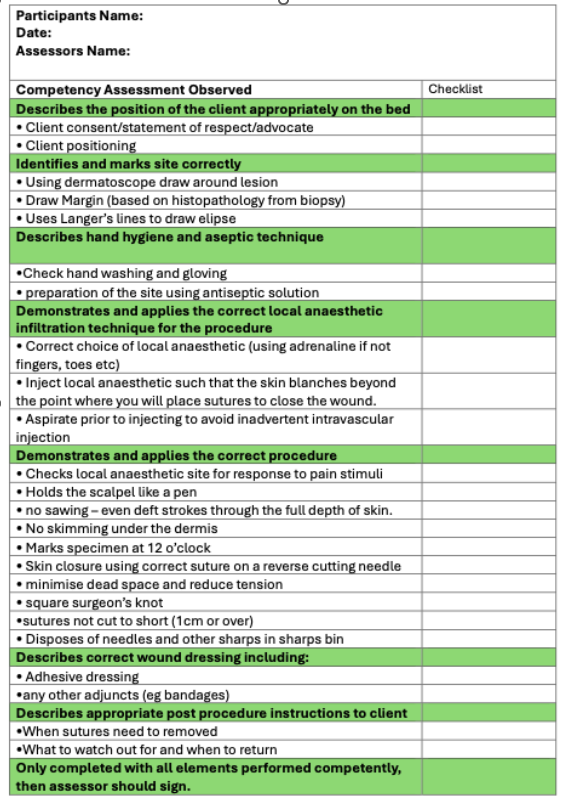
A modified Peytons method can then be applied to the teaching process which is a advance on the “see one, do one teach one” philosophy often used in medicine.

  • Demonstration. This involves the facilitator demonstrating the skill in real time without any explanation or commentary.
  • Deconstruction. The facilitator performs the procedure again, this time breaking in down into sub-steps and explaining each step.
  • Comprehension. In this step, the facilitator asks the participant to explain the procedure to the facilitator and the facilitator performs the procedure following the participants instructions.
  • Performance. In the final step, the participant performs the procedure on their own without coaching or guidance by the facilitator.
  • Error correction – verbal guidance increases cognitive load but it is important that any errors identified in skills are corrected as they occur
  • Incorporate visual aids, simulation, and checklists where appropriate.

Break the skill into small, digestible components. Avoid overloading registrars with too much feedback at once. Focus on one or two key points per session and offer timely, concise feedback.

Use your task analysis to build a competency checklist. This allows you to:

  • Objectively assess performance
  • Identify knowledge gaps
  • Ensure consistency in teaching and evaluation

Registrars should demonstrate conscious competence before unsupervised practice.

Deliberate practice involves intentional, repetitive performance of a task with immediate feedback and supervision. It’s essential for:

  • Consolidating skills into long-term memory
  • Transitioning to unconscious competence
  • Maintaining procedural confidence over time

Plan regular practice sessions, even after initial competence is achieved.

Explore underlying reasons—cultural, emotional, or confidence-based. Create a safe learning environment, provide non-judgmental debriefing, and consider alternative approaches like:

  • Simulation or models
  • Peer discussion or yarning circles
  • Reframing the procedure’s purpose or patient benefit

Ensure registrars understand the importance of:

  • Informed consent (explain risks/benefits, gain genuine agreement)
  • Respectful communication (put the patient at ease)
  • Post-procedure care (follow-up, aftercare instructions, recall systems)

These non-technical skills are as vital as the procedure itself.

Refresh your skills using:

  • Peer review or mentorship
  • Simulation or workshops
  • High-quality procedural videos (YouTube, vetted medical channels)

It’s okay to learn alongside your registrar—and it models good professional behaviour.

Yes. While often associated with surgical or invasive tasks, any procedural or physical skill—from PR exams to wound care or contraceptive insertion—can and should be taught using a structured, stepwise, patient-centred approach.

  • Task analysis worksheets
  • Checklists based on skill steps
  • DOPS (Direct Observation of Procedural Skills) forms
  • Simulation models
  • Visual aids and diagrams
  • Trusted online video tutorials

Remember: You are unconsciously competent. To teach well, slow down, unpack each step, and build the procedure from the ground up. Be the bridge from “not yet” to “I’ve got this.”

  • Benner, P. (1982). From Novice to Expert. The American Journal of Nursing, 82(3), 402–407.
  • Bing-You, R., Hayes, V., Varaklis, K., Trowbridge, R.,
  • Kemp, H., & McKelvy, D. (2017). Feedback for Learners in Medical Education: What Is Known? A Scoping Review. Academic Medicine, 92(9), 1346–1354.
  • Bosse, H. M., Mohr, J., Buss, B., Krautter, M., Weyrich, P., Herzog, W., Jünger, J., & Nikendei, C. (2015). The benefit of repetitive skills training and frequency of expert feedback in the early acquisition of procedural skills. BMC Medical Education, 15(1), 22–22.
  • Burgess, A., van Diggele, C., Roberts, C., & Mellis, C. (2020). Tips for teaching procedural skills. BMC Medical Education, 20(Suppl 2), 458–458.
  • Dreyfus, S. E., & Dreyfus, H. L. (1980). A five-stage model of the mental activities involved in directed skill acquisition. Distribution 22.
  • Ericsson, K. (2008). Deliberate Practice and Acquisition of Expert Performance: A General Overview. Academic Emergency Medicine, 15(11), 988–994.
  • Frank, J. R., Snell, L. S., Cate, O. T., Holmboe, E. S., Carraccio, C., Swing, S. R., Harris, P., Glasgow, N. J., Campbell, C., Dath, D., Harden, R. M., Iobst, W., Long, D. M., Mungroo, R., Richardson, D. L., Sherbino, J., Persky, A. M., & Robinson, J. D. (2017). Moving from Novice to Expertise and Its Implications for Instruction. American Journal of Pharmaceutical Education, 81(9), 6065–6080.
  • Johnson, J., Ahluwalia, S. Neurodiversity in the healthcare profession, Postgraduate Medical Journal, Volume 101, Issue 1192, February 2025, Pages 167–171
    Peyton JWR (1999). The learning cycle. In: Peyton JWR, editor. Teaching and learning in medical practice. Rickmansworth: Manticore Europe Ltd; p. 13–9.
  • Quinn, A., Falvo, L., Ford, T., Kennedy, S., Kaminsky, J., & Messman, A. (2021). Curated collections for educators: Six key papers on teaching procedural skills. AEM Education and Training, 5(4), e10692-n/a.
  • Sawyer, T., White, M., Zaveri, P., Chang, T., Ades, A., French, H., Anderson, J., Auerbach, M., Johnston, L., & Kessler, D. (2015). Learn, See, Practice, Prove, Do, Maintain: An Evidence-Based Pedagogical Framework for Procedural Skill Training in Medicine. Academic Medicine, 90(8), 1025–1033.
  • Schnotz, W. (2010). Reanalyzing the expertise reversal effect. Instructional Science, 38(3), 315–323.
    Silver, I., Taber, S., Talbot, M., & Harris, K. A. (2010). Competency-based medical education: theory to practice. Medical Teacher, 32(8), 638–645.
  • Telio, S., Ajjawi, R., & Regehr, G. (2015). The “Educational Alliance” as a Framework for Reconceptualizing Feedback in Medical Education. Academic Medicine, 90(5), 609–614.
    Tremblay, M., Rethans, J., & Dolmans, D. (2023). Task complexity and cognitive load in simulation‐based education: A randomised trial. Medical Education, 57(2), 161–169.
  • van Merrienboer, J. J. G., & Sweller, J. (2010). Cognitive load theory in health professional education: design principles and strategies. Medical Education, 44(1), 85–93.
  • Weallans, J., Roberts, C., Hamilton, S., & Parker, S. (2022). Guidance for providing effective feedback in clinical supervision in postgraduate medical education: a systematic review. Postgraduate Medical Journal, 98(1156), 138–149.
  • Wearne, S., Australian Family Physician (2011) Vol. 40, 63-67

Date reviewed: 02 February 2026

Please note that while reasonable care is taken to provide accurate information at the time of creation, we frequently update content and links as needed. If you identify any inconsistencies or broken links, please let us know by email.

This website uses cookies. Read our privacy policy.
Teaching, Learningm Assessment and Feedback

FAQ: Rational Test Ordering

What is rational test ordering?

Rational test ordering refers to the thoughtful, evidence-based, and patient-centered use of investigations (both pathology and imaging). It aims to strike a balance between under-testing (risking missed diagnoses) and over-testing (leading to harm, stress, and unnecessary follow-ups).

Over-testing is common, with studies suggesting up to 50–75% of tests may be unnecessary.

Why is it important in general practice?

  • Rational test ordering:
  • Minimises unnecessary testing
  • Reduces harm from false positives
  • Preserves healthcare resources
  • Improves diagnostic accuracy

What are the harms of over-testing?

  • False positives and cascade testing
  • Increased patient anxiety
  • Physical harm from invasive follow-up procedures
  • Overdiagnosis and unnecessary treatment
  • Waste of time and healthcare resources
  • Cognitive burden on clinicians

How can over-testing specifically harm patients?

  • Psychological stress from incidental findings
  • Physical complications (e.g., biopsy-related bleeding)
  • Unnecessary referrals and interventions
  • Mislabelling with disease and long-term consequences
  • Diversion of attention from more meaningful clinical care
  • Defensive medicine and fear of missing a diagnosis
  • Patient expectations or demands
  • Time pressures and shortcuts
  • Clinical inexperience and uncertainty
  • Habitual hospital-based test ordering
  • Cognitive biases (e.g., availability bias)
  • System factors like ease of access and lack of oversight
  • Absolutely. Overuse of imaging (e.g., unnecessary MRIs or CTs) can lead to incidentalomas, costly follow-up, and unnecessary anxiety—without improving outcomes.

    No. Rational testing isn’t about doing fewer tests; it’s about testing with intention and purpose. Every test ordered should have a clear rationale and a potential to influence clinical management.

    It’s the optimal point between too few and too many tests—where clinical safety, efficiency, and patient-centered care intersect. The goal is to use clinical judgment and evidence to decide what is truly necessary.

    Yes. Common examples include:
  • Inflammatory markers (CRP/ESR) for vague symptoms like fatigue
  • Thyroid function tests in asymptomatic individuals or as routine annual screens
  • ANA without a clear indication of autoimmune disease
  • Shoulder ultrasounds in older adults
    • Prioritise history and physical examination
    • Use the ‘investigation pause’: Ask yourself, “Will this change my management?”
    • Avoid batch testing or shotgun panels
    • Start with serial testing—add on only when needed
    • Use validated guidelines and tools (e.g., HealthPathways, RCPA Manual)
    • Educate patients on the risks of over-testing

    Inbox review is a teaching tool where supervisors and registrars review recent test results together. They reflect on:

    • Why the test was ordered
    • Whether it changed management
    • Any unintended consequences It promotes critical thinking, insight, and habit change.
  • Explain your own decision-making during consults
  • Encourage open discussion around uncertainty
  • Challenge unnecessary test choices constructively
  • Share resources and tools to guide evidence-based testing
  • Show that not testing is sometimes the safer option
  • Consumer-driven healthcare, online testing services, and sensational media stories (e.g., TV health check segments) increase patient demand for unnecessary testing. Patients may present with privately ordered results, creating additional clinical burden.

    Use shared decision-making. Example:
    “We could do a bunch of tests, but based on what you’ve told me and your exam, I don’t think they’ll help us. Let’s monitor things and revisit if anything changes.” This builds trust and reassures patients that clinical decisions are thoughtful and safe.

    • Normalise uncertainty—medicine isn’t black-and-white
    • Help registrars articulate their thinking
    • Use real examples (especially ones with unintended consequences)
    • Encourage curiosity and evidence-seeking

    Date reviewed: 13 November 2025

    Please note that while reasonable care is taken to provide accurate information at the time of creation, we frequently update content and links as needed. If you identify any inconsistencies or broken links, please let us know by email.

    This website uses cookies. Read our privacy policy.
    Teaching, Learningm Assessment and Feedback

    Maximising the educational value of the ECTV FAQ

    What is the ECTV?

    External clinical teaching visits (ECTVs) are a key teaching and formative assessment method in Australian GP training. They are a highly valuable educational activity for registrars. As well, they act as a ‘second set of eyes’, and thus are an excellent way to review alignment between supervisor and training program assessments of a registrar’s progress.

    What is Programmatic Assessment (PA) and Workplace-Based Assessments (WBA)?

    ECTVs are a Workplace Based Assessment (WBA) activity and part of Programmatic Assessment. There has been a shift towards programmatic assessment in medical education, focussing on the importance of multiple low-stakes assessments throughout training, as opposed to a single high-stakes summative assessment at the end. WBA are core to PA, in authenticating learning and developing skills such as managing uncertainty and maintaining professionalism.

    Is the purpose of the ECTV teaching or assessment?

    ECTVs are designed as both a teaching and assessment method, but there is a potential conflict inherent in this which needs to be carefully managed.

    How can the educational value of the ECTV be enhanced?

    GPSA has developed a ‘How to…’ guide for supervisors on maximising the educational value of the ECTV. It covers five areas and is intended to be a practical guide. These areas include:

    • Planning for the visit
    • Interacting with the teaching visitor
    • Reviewing the ECTV report
    • Discussion with the registrar
    • Follow-up

    Date reviewed: 13 November 2025

    Please note that while reasonable care is taken to provide accurate information at the time of creation, we frequently update content and links as needed. If you identify any inconsistencies or broken links, please let us know by email.

    This website uses cookies. Read our privacy policy.
    Teaching, Learningm Assessment and Feedback

    FAQ: Preparing your registrar for StAMPS

    For convenience, you can read through this resource here, or use the pdf tools at the top of the document to download and / or print the file. 

    Date reviewed: 16 March 2026

    Please note that while reasonable care is taken to provide accurate information at the time of creation, we frequently update content and links as needed. If you identify any inconsistencies or broken links, please let us know by email.

    This website uses cookies. Read our privacy policy.
    Teaching, Learningm Assessment and Feedback

    FAQ: Supporting your registrar’s preparation for the Clinical Competency Examination (CCE)

    For convenience, you can read through this resource here, or use the pdf tools at the top of the document to download and / or print the file.

    Date reviewed: 18 March 2026

    Please note that while reasonable care is taken to provide accurate information at the time of creation, we frequently update content and links as needed. If you identify any inconsistencies or broken links, please let us know by email.

    This website uses cookies. Read our privacy policy.
    Teaching, Learningm Assessment and Feedback

    FAQ: Supporting Your Registrar to Provide Best Practice Disability Care

    This FAQ offers guidance for supporting registrars in delivering best practice care for individuals with disabilities. It highlights essential strategies to improve disability care in clinical settings.

    For convenience, you can read through this resource here, or use the pdf tools at the top of the document to download and / or print the file.

    Date reviewed: 28 October 2025

    Please note that while reasonable care is taken to provide accurate information at the time of creation, we frequently update content and links as needed. If you identify any inconsistencies or broken links, please let us know by email.

    This website uses cookies. Read our privacy policy.
    Teaching, Learningm Assessment and Feedback

    FAQ: Teaching Your Registrar About LGBTQIA+ Inclusive Care

    This FAQ provides guidance on teaching registrars how to create an inclusive environment for LGBTQIA+ patients. It addresses strategies for improving care and enhancing understanding of this community’s needs.

    For convenience, you can read through this resource here, or use the pdf tools at the top of the document to download and / or print the file.

    Date reviewed: 28 October 2025

    Please note that while reasonable care is taken to provide accurate information at the time of creation, we frequently update content and links as needed. If you identify any inconsistencies or broken links, please let us know by email.

    This website uses cookies. Read our privacy policy.
    Teaching, Learningm Assessment and Feedback

    FAQ: Formal Teaching and Problem Case Discussion

    This FAQ covers formal teaching methods and problem case discussions in GP supervision, offering essential guidance for effective teaching. It provides valuable insights into structuring these sessions to enhance learning and support GP registrars in their training.

    For convenience, you can read through this resource here, or use the pdf tools at the top of the document to download and / or print the file.

    Date reviewed: 23 October 2025

    Please note that while reasonable care is taken to provide accurate information at the time of creation, we frequently update content and links as needed. If you identify any inconsistencies or broken links, please let us know by email.

    This website uses cookies. Read our privacy policy.
    Teaching, Learningm Assessment and Feedback

    FAQ: Teaching Professional and Ethical Practice

    Teaching professional and ethical practice is a cornerstone of effective medical education. This FAQ provides clear answers to common questions on this critical topic.

    For convenience, you can read through this resource here, or use the pdf tools at the top of the document to download and / or print the file.

    Date reviewed: 28 October 2025

    Please note that while reasonable care is taken to provide accurate information at the time of creation, we frequently update content and links as needed. If you identify any inconsistencies or broken links, please let us know by email.

    This website uses cookies. Read our privacy policy.
    Teaching, Learningm Assessment and Feedback

    FAQ: Planning Learning

    This FAQ provides essential insights for supervisors and registrars to create effective, structured learning plans. Discover answers to common questions and resources to streamline the learning process.

    For convenience, you can read through this resource here, or use the pdf tools at the top of the document to download and / or print the file.

    Date reviewed: 26 October 2025

    Please note that while reasonable care is taken to provide accurate information at the time of creation, we frequently update content and links as needed. If you identify any inconsistencies or broken links, please let us know by email.

    This website uses cookies. Read our privacy policy.