Procedural skills are an essential part of general practice, particularly in rural and remote settings. Teaching these skills helps maintain a broader scope of care, supports registrar confidence, and ensures patient access to timely procedures.
The major difference between a procedural skill and a communication (or interview) skill is that it is assigned to “muscle memory” and does not require conscious thought except at key steps. Because of this, supervisors often have difficulty identifying how they learnt a procedural skill in order to teach it to others regardless of how expert they are at that particular procedure.
Fitz and Posner identified three key stages of learning motor skills:
The breakdown of a procedural skill can be achieved by task analysis in which the supervisor:
This becomes the foundation for teaching, feedback, and assessment.
A competency checklist lists all the key steps and can be used as an assessment tool. For example,
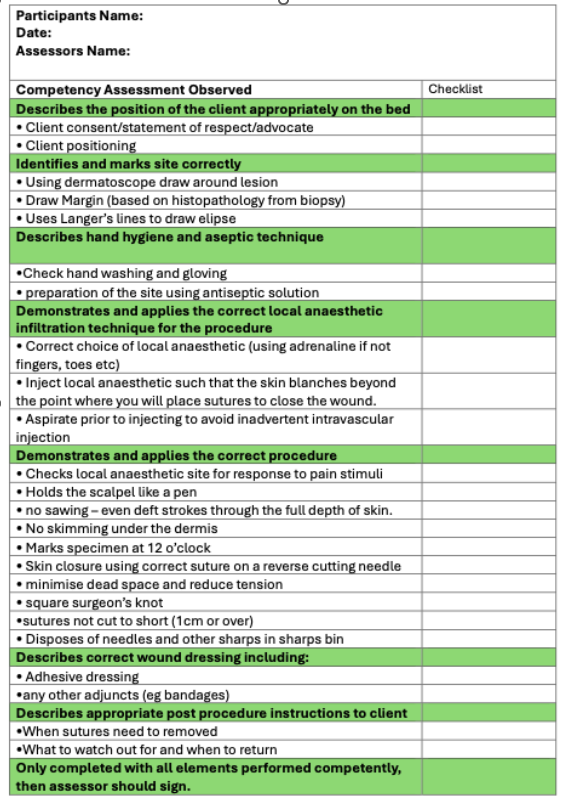
A modified Peytons method can then be applied to the teaching process which is a advance on the “see one, do one teach one” philosophy often used in medicine.
Break the skill into small, digestible components. Avoid overloading registrars with too much feedback at once. Focus on one or two key points per session and offer timely, concise feedback.
Use your task analysis to build a competency checklist. This allows you to:
Registrars should demonstrate conscious competence before unsupervised practice.
Deliberate practice involves intentional, repetitive performance of a task with immediate feedback and supervision. It’s essential for:
Plan regular practice sessions, even after initial competence is achieved.
Explore underlying reasons—cultural, emotional, or confidence-based. Create a safe learning environment, provide non-judgmental debriefing, and consider alternative approaches like:
Ensure registrars understand the importance of:
These non-technical skills are as vital as the procedure itself.
Refresh your skills using:
It’s okay to learn alongside your registrar—and it models good professional behaviour.
Yes. While often associated with surgical or invasive tasks, any procedural or physical skill—from PR exams to wound care or contraceptive insertion—can and should be taught using a structured, stepwise, patient-centred approach.
Remember: You are unconsciously competent. To teach well, slow down, unpack each step, and build the procedure from the ground up. Be the bridge from “not yet” to “I’ve got this.”
Date reviewed: 02 February 2026
Please note that while reasonable care is taken to provide accurate information at the time of creation, we frequently update content and links as needed. If you identify any inconsistencies or broken links, please let us know by email.
Rational test ordering refers to the thoughtful, evidence-based, and patient-centered use of investigations (both pathology and imaging). It aims to strike a balance between under-testing (risking missed diagnoses) and over-testing (leading to harm, stress, and unnecessary follow-ups).
Over-testing is common, with studies suggesting up to 50–75% of tests may be unnecessary.
Absolutely. Overuse of imaging (e.g., unnecessary MRIs or CTs) can lead to incidentalomas, costly follow-up, and unnecessary anxiety—without improving outcomes.
No. Rational testing isn’t about doing fewer tests; it’s about testing with intention and purpose. Every test ordered should have a clear rationale and a potential to influence clinical management.
It’s the optimal point between too few and too many tests—where clinical safety, efficiency, and patient-centered care intersect. The goal is to use clinical judgment and evidence to decide what is truly necessary.
Inbox review is a teaching tool where supervisors and registrars review recent test results together. They reflect on:
Consumer-driven healthcare, online testing services, and sensational media stories (e.g., TV health check segments) increase patient demand for unnecessary testing. Patients may present with privately ordered results, creating additional clinical burden.
Use shared decision-making. Example:
“We could do a bunch of tests, but based on what you’ve told me and your exam, I don’t think they’ll help us. Let’s monitor things and revisit if anything changes.” This builds trust and reassures patients that clinical decisions are thoughtful and safe.
Date reviewed: 13 November 2025
Please note that while reasonable care is taken to provide accurate information at the time of creation, we frequently update content and links as needed. If you identify any inconsistencies or broken links, please let us know by email.
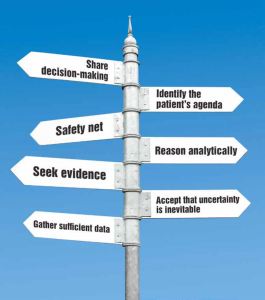
The “trifecta” refers to the interconnectedness of clinical reasoning, the management of uncertainty, and the reduction of diagnostic error. Good reasoning and effective management of uncertainty lead to fewer errors.
No, the discussion will not focus on the management of errors after they have occurred. However, it will emphasise the importance of open discussions about errors as learning opportunities and point to resources like Medical Defence Organisation Fact Sheets.
Diagnostic error involves both failing to establish an accurate and timely diagnosis and failing to communicate that explanation effectively to the patient.
Diagnostic error is a significant issue, accounting for a substantial portion (around a third) of medical claims.
Case studies provide practical examples for registrars to analyse clinical reasoning, identify potential errors, and discuss strategies for improvement.
Supervisors can:
The main categories are:
No, diagnostic errors often result from a combination of factors. The “Swiss cheese model” illustrates how multiple factors can align to create an opportunity for error.
Cognitive biases are flawed thinking patterns that can lead to errors in judgment and decision-making.
The diagnostic pause is a brief period during the consultation where the clinician intentionally stops to reflect on the case, consider potential diagnoses, and plan the next steps.
It allows the clinician to:
Clinicians can:
ICE stands for Ideas, Concerns, and Expectations. These questions help explore the patient’s perspective:
Rational test ordering involves selecting investigations that are most likely to benefit the patient while minimizing harm and unnecessary costs.
Resources include:
Gut feelings are intuitive senses of unease or concern about a patient. They can be valuable signals that warrant further investigation or attention.
AI has the potential to assist with tasks like documentation and data analysis. However, there are concerns about its impact on clinical reasoning and the potential for bias. The RACGP recommends against using AI scribes for GPT1 registrars.
Date reviewed: 25 October 2025
Please note that while reasonable care is taken to provide accurate information at the time of creation, we frequently update content and links as needed. If you identify any inconsistencies or broken links, please let us know by email.
WHAT IS HEALTHPATHWAYS?
HealthPathways offers clinicians locally agreed information to support clinical decision-making at the point of care. It integrates clinical guidance, service and referral options, and patient resources into a single platform tailored for specific local contexts. It is a useful resource for clinical practice and GP training, and enables reflective learning, quality improvement and audit.
HOW ARE THE PATHWAYS DEVELOPED?
Community HealthPathways is developed by GPs and primary care clinicians for general practice teams. Local GP or primary care clinical editors collaborate with specialists, subject matter experts, and health system and community stakeholders to create and regularly update pathways to ensure they are practical, reflect local reality, and are evidence-based.
Local clinical editors adapt pathways to regional contexts, aligning them with referral criteria, healthcare system processes, and regional services.
Localised pathways are updated regularly. Urgent changes are flagged with “clinical editor notes” until formal reviews are completed.
WHO FUNDS AND RUNS HEALTHPATHWAYS?
In Australia, depending on the area, HealthPathways is funded and supported by state services, the Commonwealth-funded Primary Health Networks (PHNs), or a collaboration of the two. In New Zealand, it is funded and supported by Health New Zealand | Te Whatu Ora.
Streamliners host the platform, partnering with and bringing together HealthPathways Community members in Australia, New Zealand, the UK, and Canada.
Pathways can be shared across the community where appropriate, then customised for local care. Some regions also use hospital-specific pathways, Hospital HealthPathways.
Patient information, such as handouts or credible website links, is embedded into pathways to enhance consultations. This is also available at the bottom of the pathways in the patient information section.
HealthPathways provides structured guidance for consultations, refining differential diagnosis, managing rare conditions, curated resources, and insights into the local health system. It helps GPs know local, “how things are done around here” information.
Supervisors can use it for teaching and reflective learning and to identify knowledge gaps. It can support audit and quality improvement.
Information, services and resources for diverse populations, such as interpreter services and community support, enable more equitable care.
Use the “Feedback” button at the bottom right of any page to report issues, suggest improvements, or engage with your local HealthPathways team, including GP colleagues.
They can integrate it into teaching sessions, model its use during case discussions, and encourage registrars to access it regularly.
HealthPathways supports learning and is embedded in GP training to prepare trainees for assessments like the Fellowship exams.
This creates a teaching opportunity to discuss new information with supervisors, evaluate its relevance, and explore its application.
Understanding what resources registrars use, and how they are using them, ensures that registrars are relying on credible tools and using them effectively. It also allows supervisors to align teaching with those resources.
Patients benefit from high-quality, understandable information, evidence-based practices, and streamlined referrals.
A search tip is to use the “Expand All” option or Ctrl+F to find terms within a pathway.
AI assisted Smart Search allows you to navigate directly to the location on the pathway that contains the information you require. This new feature is being progressively released and will be available on all HealthPathways sites by mid-2025.
No, it complements clinical judgement and supports individualised decision-making while enhancing patient care.
Unlike general guidelines, it is tailored to GPs, integrating evidence-based recommendations with local healthcare requirements. Unlike some resources available on the internet, there is robust clinical governance over content.
It provides transparency about what information is needed for a quality referral, increasing the chance of acceptance. It also explains the referral and access criteria within the limitations of a public health system.
Sharing its benefits, demonstrating its use, and promoting frequent reference can encourage adoption.
It enables knowledge sharing and collective improvement through user feedback and updates.
Yes, the CPD reporting feature allows you to log reflective notes on pathway usage, fostering integration of reflective learning into practice. Your personal data is confidential and not shared with anyone. This feature is being progressively released and will be available on all sites by mid-2025.
Pathways also make a useful basis for an audit of your practice and for practice improvement activities.
healthpathwayscommunity.org/Home/Access-to-HealthPathways
HealthPathways is free for clinicians to use.
Date reviewed: 23 October 2025
Please note that while reasonable care is taken to provide accurate information at the time of creation, we frequently update content and links as needed. If you identify any inconsistencies or broken links, please let us know by email.
Neurodivergent individuals, including those with ADHD and autism, bring unique strengths to medical practice. However, without adequate support, they may struggle with the demands of general practice training. They may come into general practice training with a diagnosis, or somewhere on their journey of learning more about their neurodiversity.
ADHD is a disorder of regulation. Approximately 4% of Australians under age 45 have a diagnosis of ADHD. Cognitive, physical and emotional dysregulation all feature to some degree in all people with ADHD. Doctors with ADHD often have strengths in creativity and cognitive dynamism. They may have excellent problem-solving skills and have clinical courage. In general practice, they may be excellent diagnosticians and have the capacity to manage uncertainty. However, they may struggle with overly creative lists of differential diagnoses and be prone to over-investigation.
To have been successful in medical studies with ADHD, a doctor must have a high intellect and resilience. They often have high energy, take calculated risks and exhibit attention variability. They can excel in environments where quick thinking and adaptability are required. If undiagnosed and untreated, they may struggle with executive dysfunction, time management, organisation and attention. Exam preparation can be very challenging and ultimately impact success.
Autism is a difference of communication and affects approximately 1% of Australians. Autistic people often have strengths in attention to detail, ethics, rules and heightened sensory awareness. Again, these can be very beneficial traits for diagnostic medicine and creating evidence-based management plans. Autistic doctors are deeply empathetic (emotional empathy is over-developed while cognitive empathy is reduced) with obvious benefit in the general practice environment. Evidence has shown that when appropriately supported autistic people are highly productive.
Many neurodivergent doctors face stigma, with some reluctant to disclose their diagnosis due to fear of discrimination. In those undiagnosed, stigma can lead to a blind spot in professional awareness and personal development. With the constant demands of masking in an environment with high level communication, autistic doctors are at a higher risk of burnout. Anxiety and depression are much more common in the autistic population. In a recent survey by Autistic Doctors International, as many as 77% had ever considered suicide. Autistic doctors may misunderstand hierarchy and have been labelled as demanding, or troublemakers, having only been victim of “talking truth to power”.
When discussing neurodiversity with a registrar, it’s important to approach the topic sensitively and compassionately, as neurodivergent conditions can be stigmatised. A supervisor may notice issues like executive dysfunction, anxiety, feeling overwhelmed, exam difficulties, or feedback on communication from staff or patients. Supervisors might consider raising the topic by focusing on observed concerns. Instead of making a direct diagnosis, it is helpful to ask questions about potential underlying issues and offer support to help the registrar identify possible challenges. A compassionate and understanding approach is key.
Supervisors can:
Support can include reasonable workplace accommodations such as part-time work, flexible hours, and emotional support from supervisors. Structuring training requirements, like project planning and deadlines, can help neurodivergent registrars manage their tasks. Small group learning adjustments and informing medical educators about a registrar’s condition can also provide tailored support. Consider stepping through the Autistic SPACE model. ADHD Registrars may need assistance with directing the creative process and focusing on key features of a clinical presentation rather than becoming overwhelmed with masses of details.
There are various resources available for neurodivergent doctors, including psychologists, ADHD coaches, and professional job coaching services. Additionally, support groups like Autistic Doctors International and ADHD Coaches Australasia provide valuable connections and training for neurodivergent medical professionals.
While exam formats remain the same, registrars with neurodiverse conditions may be eligible for accommodations such as extended time or breaks during exams. These adjustments can help registrars perform at their best without feeling overwhelmed.
Summary
What are the key points for medical educators and supervisors?
Date reviewed: 23 October 2025
Please note that while reasonable care is taken to provide accurate information at the time of creation, we frequently update content and links as needed. If you identify any inconsistencies or broken links, please let us know by email.
External clinical teaching visits (ECTVs) are a key teaching and formative assessment method in Australian GP training. They are a highly valuable educational activity for registrars. As well, they act as a ‘second set of eyes’, and thus are an excellent way to review alignment between supervisor and training program assessments of a registrar’s progress.
ECTVs are a Workplace Based Assessment (WBA) activity and part of Programmatic Assessment. There has been a shift towards programmatic assessment in medical education, focussing on the importance of multiple low-stakes assessments throughout training, as opposed to a single high-stakes summative assessment at the end. WBA are core to PA, in authenticating learning and developing skills such as managing uncertainty and maintaining professionalism.
ECTVs are designed as both a teaching and assessment method, but there is a potential conflict inherent in this which needs to be carefully managed.
GPSA has developed a ‘How to…’ guide for supervisors on maximising the educational value of the ECTV. It covers five areas and is intended to be a practical guide. These areas include:
Date reviewed: 13 November 2025
Please note that while reasonable care is taken to provide accurate information at the time of creation, we frequently update content and links as needed. If you identify any inconsistencies or broken links, please let us know by email.
To effectively support and train registrars in poorly resourced environments, RVTS has identified that addressing the registrar’s professional and non-professional needs is crucial. By considering the contexts of person, place, and program, a supportive environment can be created where registrars feel comfortable, confident, competent, and have a sense of belonging and bonding with peers. This promotes effective training in challenging settings.
The Remote Vocational Training Scheme (RVTS) uses distance education and remote supervision to deliver training without requiring registrars to leave their communities. This model has proven successful over 24 years, training more than 500 doctors in 350 communities. Almost 80% of participants achieve fellowship while providing an average of 5.2 years of service in their training location.
RVTS has used multiple strategies over the years, each tailored to individual registrars and settings. However, the following have been important.
The University of Queensland recently undertook an evaluation of RVTS since its inception in 2000 and found evidence to support the effectiveness of RVTS ‘ efforts in training doctors in poorly resourced environments. This has informed the development of an evidence-based framework that includes:
The following resources are helpful:
Date reviewed: 23 October 2025
Please note that while reasonable care is taken to provide accurate information at the time of creation, we frequently update content and links as needed. If you identify any inconsistencies or broken links, please let us know by email.
‘The aim of all supervision and feedback is to make learners reflect on their practice’.
Clinical practice is far from straightforward. GPs practice complex competencies in a clinical world rich with uncertainty and where the textbook knowledge only provides some of the answers. Clinical decision-making therefore requires GPs to combine experience-based knowledge with evidence-based knowledge, but also to constructively process both formal and informal feedback.
The ability to reflect is necessary for efficient use of feedback and essential when performing complex competencies in practice. It has been argued that the ability to reflect on one’s own role and performance is the key factor in expertise development – indeed, that the aim of all supervision and feedback should be to facilitate the learner’s reflection on their own practice.
‘Clarifying supervision’ is based on direct instruction and confirmation of a decision, whereas ‘expanding’ or ‘broadening supervision seeks to generate reflection through questions that create ‘productive struggle’, link knowledge with practice, or broaden the case. The nature of the registrar and situation may determine which type of supervision is most appropriate, but expanding supervision allows for significantly greater reflection and professional development.
It is important to not ‘examine’ the registrar and make them feel uncomfortable.
Some competencies require discussions broader than a series of patient cases. It is important to assess reflection because of its link to good clinical practice. A new tool has been developed called the Global Assessment of Reflection Ability (GAR) (Lillevang et al. BMC Medical Education (2020) 20:352).
The GAR is a tool for formative and summative assessment of the ability to reflect. It works in two parts.
This begins with the trainee presenting his/her mind map/written presentation which then is the basis for a structured discussion between trainer and trainee that includes references to the concrete experience that the trainee has had.
The trainee produces a mind map or similar written presentation in a concept formation process addressing a concrete, complex competency. The trainee is given 1-2 weeks for the preparation and uses the description of the competency in the curriculum.
The focus of the discussion is on formative aspects leading to a plan for further learning, but it also includes a summative assessment of whether the competency is successfully achieved.
Date reviewed: 23 October 2025
Please note that while reasonable care is taken to provide accurate information at the time of creation, we frequently update content and links as needed. If you identify any inconsistencies or broken links, please let us know by email.
Resources
This webpage complements the webinar recordings on this topic, available either via our YouTube channel or in audio format by clicking on the corresponding button below:
During your weekly teaching session, Nicole, your GPT1 registrar, asks you about a patient she has seen with ‘possible long COVID’:
Nicole says that “it sounds like Long COVID”, but admits she has never managed anyone with this before. She asks for your advice on how to proceed.
Learners will come with learning needs – mainly those they want to learn. These are driven by identified knowledge and skill gaps, and exams…
But there are many things they need to learn.
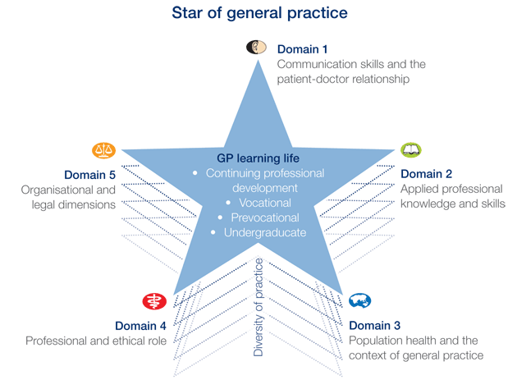
The RACGP uses the star analogy to describe general practice through 5 domains of general practice:

The term ‘long COVID’ is generally used to describe both:
“Post COVID-19 condition occurs in individuals with a history of probable or confirmed SARS-CoV-2 infection, usually 3 months from the onset of COVID-19 with symptoms that last for at least 2 months and cannot be explained by an alternative diagnosis.
Common symptoms include fatigue, shortness of breath and cognitive dysfunction, as well as others that generally have an impact on everyday functioning. Symptoms may be new onset, following initial recovery from an acute COVID-19 episode, or persist from the initial illness.”
‘Sick and Tired: Casting a long shadow’ summary of report recommendations:
Date reviewed: 13 November 2025
Please note that while reasonable care is taken to provide accurate information at the time of creation, we frequently update content and links as needed. If you identify any inconsistencies or broken links, please let us know by email.
Your female registrar discusses a 50 year-old man she saw this morning for a checkup:
She admits she became frustrated when much of the discussion side-tracked to whether he should get an STI check, because he said “I am married and don’t need those sorts of things”, becoming visually upset.
For a man aged 50, the benefit is greatest for quitting smoking (24 fewer deaths per 1000 males per decade), which is 10 times the benefit of lowering lipids in a man with metabolic syndrome and 50 times greater than from participating in regular colorectal cancer screening.*
Benefits for women are generally lower, as their baseline risk is lower.*
*Ewald B, Del Mar C, Hoffman T. Quantifying the benefits and harms of various preventive health activities. AJGP (2018) vol 47:12
** Coleman J. Excessive PSA testing in general practice. Med J Aust 2021; 215 (5)
Date reviewed: 13 November 2025
Please note that while reasonable care is taken to provide accurate information at the time of creation, we frequently update content and links as needed. If you identify any inconsistencies or broken links, please let us know by email.