FAQ

FAQ: How to Teach a Procedural Skill

Why is it important to teach procedural skills in general practice?

Procedural skills are an essential part of general practice, particularly in rural and remote settings. Teaching these skills helps maintain a broader scope of care, supports registrar confidence, and ensures patient access to timely procedures.

What is the difference between teaching procedural and other skills?

The major difference between a procedural skill and a communication (or interview) skill is that it is assigned to “muscle memory” and does not require conscious thought except at key steps. Because of this, supervisors often have difficulty identifying how they learnt a procedural skill in order to teach it to others regardless of how expert they are at that particular procedure.

What are the three key stages of learning motor skills?

Fitz and Posner identified three key stages of learning motor skills:

  • Cognitive – when movements are being learnt they are slow and clumsy due to being consciously controlled.
  • Associative stage – some of the movements are automatic and fluid but others require executive oversight and are slow and jerky.
  • Autonomous stage – Fluid, accurate and fast movements.

What is the first step in teaching a procedural skill?

The breakdown of a procedural skill can be achieved by task analysis in which the supervisor:

  • Visualises the procedure
  • Writes down the key steps
    • Motor skills (what the hands do)
    • Cognitive steps (what the mind must consider)
    • Decision-making points (critical judgments or pitfalls)
  • Reconstructs the task and see if anything is missing

This becomes the foundation for teaching, feedback, and assessment.

A competency checklist lists all the key steps and can be used as an assessment tool. For example,
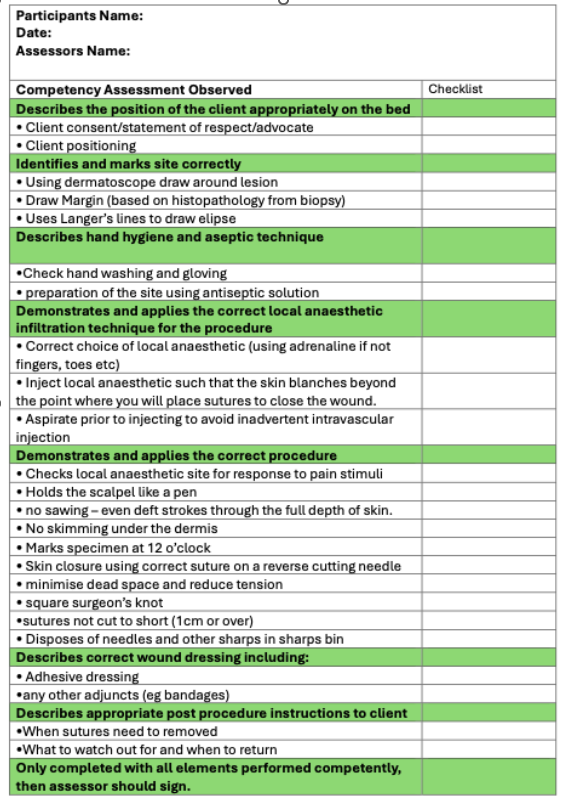
A modified Peytons method can then be applied to the teaching process which is a advance on the “see one, do one teach one” philosophy often used in medicine.

  • Demonstration. This involves the facilitator demonstrating the skill in real time without any explanation or commentary.
  • Deconstruction. The facilitator performs the procedure again, this time breaking in down into sub-steps and explaining each step.
  • Comprehension. In this step, the facilitator asks the participant to explain the procedure to the facilitator and the facilitator performs the procedure following the participants instructions.
  • Performance. In the final step, the participant performs the procedure on their own without coaching or guidance by the facilitator.
  • Error correction – verbal guidance increases cognitive load but it is important that any errors identified in skills are corrected as they occur
  • Incorporate visual aids, simulation, and checklists where appropriate.

Break the skill into small, digestible components. Avoid overloading registrars with too much feedback at once. Focus on one or two key points per session and offer timely, concise feedback.

Use your task analysis to build a competency checklist. This allows you to:

  • Objectively assess performance
  • Identify knowledge gaps
  • Ensure consistency in teaching and evaluation

Registrars should demonstrate conscious competence before unsupervised practice.

Deliberate practice involves intentional, repetitive performance of a task with immediate feedback and supervision. It’s essential for:

  • Consolidating skills into long-term memory
  • Transitioning to unconscious competence
  • Maintaining procedural confidence over time

Plan regular practice sessions, even after initial competence is achieved.

Explore underlying reasons—cultural, emotional, or confidence-based. Create a safe learning environment, provide non-judgmental debriefing, and consider alternative approaches like:

  • Simulation or models
  • Peer discussion or yarning circles
  • Reframing the procedure’s purpose or patient benefit

Ensure registrars understand the importance of:

  • Informed consent (explain risks/benefits, gain genuine agreement)
  • Respectful communication (put the patient at ease)
  • Post-procedure care (follow-up, aftercare instructions, recall systems)

These non-technical skills are as vital as the procedure itself.

Refresh your skills using:

  • Peer review or mentorship
  • Simulation or workshops
  • High-quality procedural videos (YouTube, vetted medical channels)

It’s okay to learn alongside your registrar—and it models good professional behaviour.

Yes. While often associated with surgical or invasive tasks, any procedural or physical skill—from PR exams to wound care or contraceptive insertion—can and should be taught using a structured, stepwise, patient-centred approach.

  • Task analysis worksheets
  • Checklists based on skill steps
  • DOPS (Direct Observation of Procedural Skills) forms
  • Simulation models
  • Visual aids and diagrams
  • Trusted online video tutorials

Remember: You are unconsciously competent. To teach well, slow down, unpack each step, and build the procedure from the ground up. Be the bridge from “not yet” to “I’ve got this.”

  • Benner, P. (1982). From Novice to Expert. The American Journal of Nursing, 82(3), 402–407.
  • Bing-You, R., Hayes, V., Varaklis, K., Trowbridge, R.,
  • Kemp, H., & McKelvy, D. (2017). Feedback for Learners in Medical Education: What Is Known? A Scoping Review. Academic Medicine, 92(9), 1346–1354.
  • Bosse, H. M., Mohr, J., Buss, B., Krautter, M., Weyrich, P., Herzog, W., Jünger, J., & Nikendei, C. (2015). The benefit of repetitive skills training and frequency of expert feedback in the early acquisition of procedural skills. BMC Medical Education, 15(1), 22–22.
  • Burgess, A., van Diggele, C., Roberts, C., & Mellis, C. (2020). Tips for teaching procedural skills. BMC Medical Education, 20(Suppl 2), 458–458.
  • Dreyfus, S. E., & Dreyfus, H. L. (1980). A five-stage model of the mental activities involved in directed skill acquisition. Distribution 22.
  • Ericsson, K. (2008). Deliberate Practice and Acquisition of Expert Performance: A General Overview. Academic Emergency Medicine, 15(11), 988–994.
  • Frank, J. R., Snell, L. S., Cate, O. T., Holmboe, E. S., Carraccio, C., Swing, S. R., Harris, P., Glasgow, N. J., Campbell, C., Dath, D., Harden, R. M., Iobst, W., Long, D. M., Mungroo, R., Richardson, D. L., Sherbino, J., Persky, A. M., & Robinson, J. D. (2017). Moving from Novice to Expertise and Its Implications for Instruction. American Journal of Pharmaceutical Education, 81(9), 6065–6080.
  • Johnson, J., Ahluwalia, S. Neurodiversity in the healthcare profession, Postgraduate Medical Journal, Volume 101, Issue 1192, February 2025, Pages 167–171
    Peyton JWR (1999). The learning cycle. In: Peyton JWR, editor. Teaching and learning in medical practice. Rickmansworth: Manticore Europe Ltd; p. 13–9.
  • Quinn, A., Falvo, L., Ford, T., Kennedy, S., Kaminsky, J., & Messman, A. (2021). Curated collections for educators: Six key papers on teaching procedural skills. AEM Education and Training, 5(4), e10692-n/a.
  • Sawyer, T., White, M., Zaveri, P., Chang, T., Ades, A., French, H., Anderson, J., Auerbach, M., Johnston, L., & Kessler, D. (2015). Learn, See, Practice, Prove, Do, Maintain: An Evidence-Based Pedagogical Framework for Procedural Skill Training in Medicine. Academic Medicine, 90(8), 1025–1033.
  • Schnotz, W. (2010). Reanalyzing the expertise reversal effect. Instructional Science, 38(3), 315–323.
    Silver, I., Taber, S., Talbot, M., & Harris, K. A. (2010). Competency-based medical education: theory to practice. Medical Teacher, 32(8), 638–645.
  • Telio, S., Ajjawi, R., & Regehr, G. (2015). The “Educational Alliance” as a Framework for Reconceptualizing Feedback in Medical Education. Academic Medicine, 90(5), 609–614.
    Tremblay, M., Rethans, J., & Dolmans, D. (2023). Task complexity and cognitive load in simulation‐based education: A randomised trial. Medical Education, 57(2), 161–169.
  • van Merrienboer, J. J. G., & Sweller, J. (2010). Cognitive load theory in health professional education: design principles and strategies. Medical Education, 44(1), 85–93.
  • Weallans, J., Roberts, C., Hamilton, S., & Parker, S. (2022). Guidance for providing effective feedback in clinical supervision in postgraduate medical education: a systematic review. Postgraduate Medical Journal, 98(1156), 138–149.
  • Wearne, S., Australian Family Physician (2011) Vol. 40, 63-67

Date reviewed: 02 February 2026

Please note that while reasonable care is taken to provide accurate information at the time of creation, we frequently update content and links as needed. If you identify any inconsistencies or broken links, please let us know by email.

This website uses cookies. Read our privacy policy.

FAQ

FAQ: Rational Test Ordering

What is rational test ordering?

Rational test ordering refers to the thoughtful, evidence-based, and patient-centered use of investigations (both pathology and imaging). It aims to strike a balance between under-testing (risking missed diagnoses) and over-testing (leading to harm, stress, and unnecessary follow-ups).

Over-testing is common, with studies suggesting up to 50–75% of tests may be unnecessary.

Why is it important in general practice?

  • Rational test ordering:
  • Minimises unnecessary testing
  • Reduces harm from false positives
  • Preserves healthcare resources
  • Improves diagnostic accuracy

What are the harms of over-testing?

  • False positives and cascade testing
  • Increased patient anxiety
  • Physical harm from invasive follow-up procedures
  • Overdiagnosis and unnecessary treatment
  • Waste of time and healthcare resources
  • Cognitive burden on clinicians

How can over-testing specifically harm patients?

  • Psychological stress from incidental findings
  • Physical complications (e.g., biopsy-related bleeding)
  • Unnecessary referrals and interventions
  • Mislabelling with disease and long-term consequences
  • Diversion of attention from more meaningful clinical care
  • Defensive medicine and fear of missing a diagnosis
  • Patient expectations or demands
  • Time pressures and shortcuts
  • Clinical inexperience and uncertainty
  • Habitual hospital-based test ordering
  • Cognitive biases (e.g., availability bias)
  • System factors like ease of access and lack of oversight
  • Absolutely. Overuse of imaging (e.g., unnecessary MRIs or CTs) can lead to incidentalomas, costly follow-up, and unnecessary anxiety—without improving outcomes.

    No. Rational testing isn’t about doing fewer tests; it’s about testing with intention and purpose. Every test ordered should have a clear rationale and a potential to influence clinical management.

    It’s the optimal point between too few and too many tests—where clinical safety, efficiency, and patient-centered care intersect. The goal is to use clinical judgment and evidence to decide what is truly necessary.

    Yes. Common examples include:
  • Inflammatory markers (CRP/ESR) for vague symptoms like fatigue
  • Thyroid function tests in asymptomatic individuals or as routine annual screens
  • ANA without a clear indication of autoimmune disease
  • Shoulder ultrasounds in older adults
    • Prioritise history and physical examination
    • Use the ‘investigation pause’: Ask yourself, “Will this change my management?”
    • Avoid batch testing or shotgun panels
    • Start with serial testing—add on only when needed
    • Use validated guidelines and tools (e.g., HealthPathways, RCPA Manual)
    • Educate patients on the risks of over-testing

    Inbox review is a teaching tool where supervisors and registrars review recent test results together. They reflect on:

    • Why the test was ordered
    • Whether it changed management
    • Any unintended consequences It promotes critical thinking, insight, and habit change.
  • Explain your own decision-making during consults
  • Encourage open discussion around uncertainty
  • Challenge unnecessary test choices constructively
  • Share resources and tools to guide evidence-based testing
  • Show that not testing is sometimes the safer option
  • Consumer-driven healthcare, online testing services, and sensational media stories (e.g., TV health check segments) increase patient demand for unnecessary testing. Patients may present with privately ordered results, creating additional clinical burden.

    Use shared decision-making. Example:
    “We could do a bunch of tests, but based on what you’ve told me and your exam, I don’t think they’ll help us. Let’s monitor things and revisit if anything changes.” This builds trust and reassures patients that clinical decisions are thoughtful and safe.

    • Normalise uncertainty—medicine isn’t black-and-white
    • Help registrars articulate their thinking
    • Use real examples (especially ones with unintended consequences)
    • Encourage curiosity and evidence-seeking

    Date reviewed: 13 November 2025

    Please note that while reasonable care is taken to provide accurate information at the time of creation, we frequently update content and links as needed. If you identify any inconsistencies or broken links, please let us know by email.

    This website uses cookies. Read our privacy policy.

    FAQ

    FAQ: Effective use of HealthPathways
    in clinical practice and GP training

    WHAT IS HEALTHPATHWAYS?
    HealthPathways offers clinicians locally agreed information to support clinical decision-making at the point of care. It integrates clinical guidance, service and referral options, and patient resources into a single platform tailored for specific local contexts. It is a useful resource for clinical practice and GP training, and enables reflective learning, quality improvement and audit.

    HOW ARE THE PATHWAYS DEVELOPED?
    Community HealthPathways is developed by GPs and primary care clinicians for general practice teams. Local GP or primary care clinical editors collaborate with specialists, subject matter experts, and health system and community stakeholders to create and regularly update pathways to ensure they are practical, reflect local reality, and are evidence-based.

    Local clinical editors adapt pathways to regional contexts, aligning them with referral criteria, healthcare system processes, and regional services.

    Localised pathways are updated regularly. Urgent changes are flagged with “clinical editor notes” until formal reviews are completed.

    WHO FUNDS AND RUNS HEALTHPATHWAYS?
    In Australia, depending on the area, HealthPathways is funded and supported by state services, the Commonwealth-funded Primary Health Networks (PHNs), or a collaboration of the two. In New Zealand, it is funded and supported by Health New Zealand | Te Whatu Ora.

    Streamliners host the platform, partnering with and bringing together HealthPathways Community members in Australia, New Zealand, the UK, and Canada.

    Pathways can be shared across the community where appropriate, then customised for local care. Some regions also use hospital-specific pathways, Hospital HealthPathways.

    1. Clinical Pathways: Assessment, management, and referral guidance for conditions. It includes both presentation-based pathways for undifferentiated conditions e.g. headaches or eye problems in children, alongside condition-based pathways e.g. diabetes.
    2. Request Pathways: Information for access and referral to local services.
    3. Resource Pages: Supplementary materials, including medication guides, infection control protocols, and health system information e.g. MBS claim.

    Patient information, such as handouts or credible website links, is embedded into pathways to enhance consultations. This is also available at the bottom of the pathways in the patient information section.

    HealthPathways provides structured guidance for consultations, refining differential diagnosis, managing rare conditions, curated resources, and insights into the local health system. It helps GPs know local, “how things are done around here” information.

    Supervisors can use it for teaching and reflective learning and to identify knowledge gaps. It can support audit and quality improvement.

    Information, services and resources for diverse populations, such as interpreter services and community support, enable more equitable care.

    Use the “Feedback” button at the bottom right of any page to report issues, suggest improvements, or engage with your local HealthPathways team, including GP colleagues.

    They can integrate it into teaching sessions, model its use during case discussions, and encourage registrars to access it regularly.

    HealthPathways supports learning and is embedded in GP training to prepare trainees for assessments like the Fellowship exams.

    This creates a teaching opportunity to discuss new information with supervisors, evaluate its relevance, and explore its application.

    Understanding what resources registrars use, and how they are using them, ensures that registrars are relying on credible tools and using them effectively. It also allows supervisors to align teaching with those resources.

    Patients benefit from high-quality, understandable information, evidence-based practices, and streamlined referrals.

    A search tip is to use the “Expand All” option or Ctrl+F to find terms within a pathway.

    AI assisted Smart Search allows you to navigate directly to the location on the pathway that contains the information you require. This new feature is being progressively released and will be available on all HealthPathways sites by mid-2025.

    No, it complements clinical judgement and supports individualised decision-making while enhancing patient care.

    Unlike general guidelines, it is tailored to GPs, integrating evidence-based recommendations with local healthcare requirements. Unlike some resources available on the internet, there is robust clinical governance over content.

    It provides transparency about what information is needed for a quality referral, increasing the chance of acceptance. It also explains the referral and access criteria within the limitations of a public health system.

    Sharing its benefits, demonstrating its use, and promoting frequent reference can encourage adoption.

    It enables knowledge sharing and collective improvement through user feedback and updates.

    Yes, the CPD reporting feature allows you to log reflective notes on pathway usage, fostering integration of reflective learning into practice. Your personal data is confidential and not shared with anyone. This feature is being progressively released and will be available on all sites by mid-2025.

    Pathways also make a useful basis for an audit of your practice and for practice improvement activities.

    healthpathwayscommunity.org/Home/Access-to-HealthPathways

    HealthPathways is free for clinicians to use.

    Date reviewed: 23 October 2025

    Please note that while reasonable care is taken to provide accurate information at the time of creation, we frequently update content and links as needed. If you identify any inconsistencies or broken links, please let us know by email.

    This website uses cookies. Read our privacy policy.

    FAQ

    FAQ Empowering Neurodivergent Registrars

    Neurodiversity in General Practice

    Neurodivergent individuals, including those with ADHD and autism, bring unique strengths to medical practice. However, without adequate support, they may struggle with the demands of general practice training. They may come into general practice training with a diagnosis, or somewhere on their journey of learning more about their neurodiversity.

    ADHD is a disorder of regulation. Approximately 4% of Australians under age 45 have a diagnosis of ADHD. Cognitive, physical and emotional dysregulation all feature to some degree in all people with ADHD. Doctors with ADHD often have strengths in creativity and cognitive dynamism. They may have excellent problem-solving skills and have clinical courage. In general practice, they may be excellent diagnosticians and have the capacity to manage uncertainty. However, they may struggle with overly creative lists of differential diagnoses and be prone to over-investigation.

    To have been successful in medical studies with ADHD, a doctor must have a high intellect and resilience. They often have high energy, take calculated risks and exhibit attention variability. They can excel in environments where quick thinking and adaptability are required. If undiagnosed and untreated, they may struggle with executive dysfunction, time management, organisation and attention. Exam preparation can be very challenging and ultimately impact success.

    Autism is a difference of communication and affects approximately 1% of Australians. Autistic people often have strengths in attention to detail, ethics, rules and heightened sensory awareness. Again, these can be very beneficial traits for diagnostic medicine and creating evidence-based management plans. Autistic doctors are deeply empathetic (emotional empathy is over-developed while cognitive empathy is reduced) with obvious benefit in the general practice environment. Evidence has shown that when appropriately supported autistic people are highly productive.

    Many neurodivergent doctors face stigma, with some reluctant to disclose their diagnosis due to fear of discrimination. In those undiagnosed, stigma can lead to a blind spot in professional awareness and personal development. With the constant demands of masking in an environment with high level communication, autistic doctors are at a higher risk of burnout. Anxiety and depression are much more common in the autistic population. In a recent survey by Autistic Doctors International, as many as 77% had ever considered suicide. Autistic doctors may misunderstand hierarchy and have been labelled as demanding, or troublemakers, having only been victim of “talking truth to power”.

    When discussing neurodiversity with a registrar, it’s important to approach the topic sensitively and compassionately, as neurodivergent conditions can be stigmatised. A supervisor may notice issues like executive dysfunction, anxiety, feeling overwhelmed, exam difficulties, or feedback on communication from staff or patients. Supervisors might consider raising the topic by focusing on observed concerns. Instead of making a direct diagnosis, it is helpful to ask questions about potential underlying issues and offer support to help the registrar identify possible challenges. A compassionate and understanding approach is key.

    Supervisors can:

    • Offer personalised accommodations for learning
    • Be aware of and sensitive to the needs of neurodivergent registrars
    • Focus on strengths and provide practical support to address challenges
    • Foster a supportive, inclusive work environment that recognises the value of neurodiversity.

    Support can include reasonable workplace accommodations such as part-time work, flexible hours, and emotional support from supervisors. Structuring training requirements, like project planning and deadlines, can help neurodivergent registrars manage their tasks. Small group learning adjustments and informing medical educators about a registrar’s condition can also provide tailored support. Consider stepping through the Autistic SPACE model. ADHD Registrars may need assistance with directing the creative process and focusing on key features of a clinical presentation rather than becoming overwhelmed with masses of details.

    There are various resources available for neurodivergent doctors, including psychologists, ADHD coaches, and professional job coaching services. Additionally, support groups like Autistic Doctors International and ADHD Coaches Australasia provide valuable connections and training for neurodivergent medical professionals.

    While exam formats remain the same, registrars with neurodiverse conditions may be eligible for accommodations such as extended time or breaks during exams. These adjustments can help registrars perform at their best without feeling overwhelmed.

    Summary
    What are the key points for medical educators and supervisors?

    • The importance of adapting teaching and supervision methods to support neurodivergent registrars.
    • A strengths-based approach that values the unique qualities neurodivergent doctors bring to the profession.

    Date reviewed: 23 October 2025

    Please note that while reasonable care is taken to provide accurate information at the time of creation, we frequently update content and links as needed. If you identify any inconsistencies or broken links, please let us know by email.

    This website uses cookies. Read our privacy policy.
    FAQ

    Training Requirements under the NTCER (AGPT)

    Teaching Time

    The training practice is required to provide supervision in accordance with the AGPT guidelines.  These differ for each level of training and according to whether the registrar is full time or part time.  The competency of the registrar must also be considered.  

    There should be a supervision team, comprising not only accredited supervisors but also other GPs, the practice manager, nursing, reception and administration staff.  Supervision is not a one-person task.

    Dependent upon the level of the registrar, the supervisor does not need to always be on site when the registrar is consulting.  

    The supervisor will generally not attend RACF or home visits with the registrar.  However, Section 9.1 states that the supervisor or a delegate should be available to attend in person within a reasonable time frame when requested, or in the case of an emergency.  

    The registrar should be aware of who to call and how to contact them if their supervisor is not on site. 

    Educational Release

    Mandatory educational release forms part of the registrar’s normal working hours, and therefore should be paid at the registrar’s base rate of pay.

    The Colleges encourage registrars to attend educational release on a full time basis, however the employer is not required to pay for more than the pro-rata total of the training provider’s mandated hours. 

    Clause 9.2(e) of the NTCER refers to this issue. 

    Practices are only required to pay and provide time off for the number of hours that equates to their FTE fraction, i.e. if a registrar works 19 hours per week, they are entitled to paid educational release of 50% of the total mandated education hours.

    As with payment, there is no obligation for the employer to provide time out of practice for the part time registrar to attend educational release on a full time basis.

    If the registrar requests time out of practice, the employer and the registrar should negotiate how this could be achieved. This may result in the registar swapping their consulting day or taking paid annual leave.  

    Should the registrar request leave without pay to attend educational release, they should ensure that they have discussed this with their College and understand the implications that this may have on their training time.

    This is tricky, and a lot comes down to practicality and the relationship you would like to have with your registrar.  

    The educational release day is for 7.5 hours so what do you do with the other 1.5 hours? Do you ask the registrar to make the time up another day?  Do you ‘dock’ their wages the 1.5 hours? Do you simply pay the 9 hours because the registrar has no control over the difference in hours? 

    Whilst the NTCER states that the hours must be paid at the base rate of pay Section 9.2 (j) , Section 9.2 (l)(a) states that whilst the registrar is entitled to be absent for the entire day, the amount that they should be paid should be UP TO the average daily hours over a 5 day/38 hour week.  This equates to 7.6 hours.  

    Therefore, the answer is that in this situation, there is 1.4 hours that the registrar could be asked to make up on another day; alternately, they could draw on annual leave to make up any shortfall. How this is managed is a matter for the registrar, supervisor and employer to determine.

    Yes – clause 9.2(m) covers this situation.  It is important to note that the alternate day off should ideally be on the day immediately before or immediately after the educational release day. 

    These days cannot be ‘banked’ for use at another time.

    Educational release is not paid time when it occurs ‘after hours’, i.e. outside the hours of 8.00am–8.00pm Monday to Friday and 8.00am–1pm on Saturday. 

    As these webinars are scheduled in the after hours period, you are not required to provide time off in lieu.  Clause 9.2(a) of the NTCER covers this.

    As you are only 2 weeks into a 26 week Semester, this is a very valid question.

    It is unlikely that an increase in rostered hours after the commencement of the training term will result in an increase in your practice subsidy under the National Consistent Payment (NCP).  However, if the employment contract is amended to a fraction of 0.75, then the registrar is entitled to paid educational release at 0.75 also.  Whether you accommodate this request will be a business decision as you will not be compensated through the AGPT program for the additional out-of-practice hours.

    Clause 9.2(l) states that if an education session is 4 hours or less, it will be treated as 4 hours or a half day against their normal hours that day. As this day is normally 8 hours, they are entitled to ‘miss’ the 8am-9am hour and commence work at 1.00pm.

    It is important when interviewing for a part time registrar that you are aware of their total commitment to the training program. 

    Clause 9.2(h) states that if a registrar is doing full time training through more than one employer, the registrar has a responsibility to use their best endeavours to ensure that the educational release is shared equitably. 

    This would mean that the registrar should provide the practice manager and/or supervisor of both practices with each other’s contact details and work flexibly within the two practices to accommodate any adjustments that are required.  There is also an expectation of the employers that they will behave equitably in this situation also to optimise the registrar’s training experience.

    Administration Time

    Administration time of 30 mins/half day – up to a maximum of 5 hours per week is provided for every registrar under clause 9.3 of the NTCER. 

    Like all GPs, registrars have work to complete that falls outside of normal appointments – checking results, speaking with other specialists or accessing appointments on their patient’s behalf. This work should be done within their 38 hours of paid time, and therefore allowance must be made in the appointment schedule for this.

    Administration time is expected to be spent on site, and to be used for appropriate purposes.  

    This allowance is not to enable the registrar to leave early, or arrive late. Neither can it be ‘banked’ and utilised for a ½ day off per week – even if this time is spent during administrative tasks. 

    The whole purpose of administration time is to assist the registrar with managing their time effectively, to promote an appropriate work/life balance and to assist with registrar – and patient – safety.  For these reasons, it is important that the guidance provided in clause 9.3 of the NTCER is followed.

    Practice Orientation

    Clause 9.4 states that the registrar is required to attend orientation after they commence their employment with the practice. In certain circumstances, this is not possible. 

    Clause 9.4(a) states that if the registrar is asked to attend prior to employment commencing, they must be paid at their base rate of pay for these hours.

    Hopefully you would have advance notice of the mandatory College educational release days in advance.  If so, we would suggest that you have a specific roster for Week 1 that includes Wednesday and provides Friday off instead (so that the registrar is able to consolidate what they learn at Wednesday’s orientation on the Thursday).  

    If this is not possible, Section 9.4(b) states that the practice must pay the registrar for the orientation hours at their base rate of pay and provide the next rostered day – in this case Thursday – off in lieu. 

    Date reviewed: 10 November 2025

    Please note that while reasonable care is taken to provide accurate information at the time of creation, we frequently update content and links as needed. If you identify any inconsistencies or broken links, please let us know by email.

    This website uses cookies. Read our privacy policy.
    FAQ

    Supporting and Training Registrars in Poorly Resourced Environments

    How is it possible to effectively support and train registrars in poorly resourced environments?

    To effectively support and train registrars in poorly resourced environments, RVTS has identified that addressing the registrar’s professional and non-professional needs is crucial. By considering the contexts of person, place, and program, a supportive environment can be created where registrars feel comfortable, confident, competent, and have a sense of belonging and bonding with peers. This promotes effective training in challenging settings.

    The Remote Vocational Training Scheme (RVTS) uses distance education and remote supervision to deliver training without requiring registrars to leave their communities. This model has proven successful over 24 years, training more than 500 doctors in 350 communities. Almost 80% of participants achieve fellowship while providing an average of 5.2 years of service in their training location.

    Three key take-home points:

    1. Training registrars in resource-poor environments involves more than providing remote supervision; a holistic professional support package must be in place for success.
    2. It’s not for everybody. Training in poorly resourced environments requires resilience and resourcefulness and is better suited to more experienced doctors.
    3. Family support as part of the training package is highly valued.

    What strategies can be implemented to support registrars in poorly resourced environments?

    RVTS has used multiple strategies over the years, each tailored to individual registrars and settings. However, the following have been important.

    • Regular Contact and Supervision: Frequent interactions with supervisors and medical educators through phone calls, emails, and visits ensure continuous support and guidance. RVTS employs a structured supervision schedule with initial frequent contacts tapering over time as registrars become more confident and experienced.
    • Flexible Approach: Adopting a flexible training approach to account for the varied situations faced by remote doctors is crucial. This involves tailoring supervision and support to meet individual needs and circumstances.
    • Face-to-Face Meetings: Organising regular face-to-face meetings to build group cohesiveness and update essential skills, especially in emergency medicine. RVTS schedules workshops twice a year, which also include social events to foster building a network and community.
    • Collegial and Peer Support: Encouraging peer interactions through weekly teletutorials, WhatsApp groups, and peer study groups, fostering a sense of belonging to a special group.
    • Family Support: Incorporating family support in the training package, such as enabling families to attend workshops, significantly contributes to retention and well-being.
    • Simple Technology Solutions: Using straightforward technology solutions such as phone, email, web-based resources, and Zoom/Teams meetings.to avoid the need for on-site technical support.

    What is an evidence-based framework for supporting registrars in poorly resourced environments, and how can I apply it?

    The University of Queensland recently undertook an evaluation of RVTS since its inception in 2000 and found evidence to support the effectiveness of RVTS ‘ efforts in training doctors in poorly resourced environments. This has informed the development of an evidence-based framework that includes:

    • Personalised Support: Tailored education and personal support from supervisors, many of whom are former registrars familiar with the local context. These supervisors serve as independent longitudinal mentors throughout the training, providing continuous, unbiased, and empathetic guidance that is relevant to the specific challenges faced by registrars.
    • The provision of holistic professional support that promotes comfort, confidence, competency, belonging, and professional bonding (the “3Cs and 2Bs”) among the registrars.
    • Continuity of Care: Provides consistent, quality care tailored to community needs in low-resource areas. This fosters…
    • Community Trust: Doctors’ longer tenure builds patient trust and deeper learning. RVTS Doctors spend an average of 5.2 years in the same practice, fostering stability.

    To effectively apply this framework:

    • Consider the registrar as a whole person by recognising the educational and psychosocial needs of registrars.
    • Encourage registrars to stay in the same practice for stability and community integration.
    • Implement supervision models that ensure independent, structured, unbiased, and continuous support throughout training.
    • Tailor training to the registrar’s specific work environment.
    • Foster community building through social and professional networks.

    Date reviewed: 23 October 2025

    Please note that while reasonable care is taken to provide accurate information at the time of creation, we frequently update content and links as needed. If you identify any inconsistencies or broken links, please let us know by email.

    This website uses cookies. Read our privacy policy.

    FAQ

    How can GP supervisors better facilitate reflective practice in their registrars?

    What is reflective practice?

    ‘The aim of all supervision and feedback is to make learners reflect on their practice’.

    Clinical practice is far from straightforward. GPs practice complex competencies in a clinical world rich with uncertainty and where the textbook knowledge only provides some of the answers. Clinical decision-making therefore requires GPs to combine experience-based knowledge with evidence-based knowledge, but also to constructively process both formal and informal feedback.

    The ability to reflect is necessary for efficient use of feedback and essential when performing complex competencies in practice. It has been argued that the ability to reflect on one’s own role and performance is the key factor in expertise development – indeed, that the aim of all supervision and feedback should be to facilitate the learner’s reflection on their own practice.

    What is the difference between ‘clarifying supervision’ and ‘expanding supervision’?

    ‘Clarifying supervision’ is based on direct instruction and confirmation of a decision, whereas ‘expanding’ or ‘broadening supervision seeks to generate reflection through questions that create ‘productive struggle’, link knowledge with practice, or broaden the case. The nature of the registrar and situation may determine which type of supervision is most appropriate, but expanding supervision allows for significantly greater reflection and professional development.

    How do I enhance reflection?  Asking good questions is the key. For example:

    • What are your considerations?
    • Why did you choose… (to give an ACE/these tests)?
    • Why do you think she seeks the doctor just now?
    • Is this normal for… (people at that age)?
    • Did you ask about… (symptoms/concerns)?
    • Is that a high ALAT value?
    • What could have made you choose to refer the patient?
    • How does this situation differ from..
    • What if… (the patient had a fever)
    • Would it affect your decision if you knew that…?
    • What would be the next step?
    • What would be your second choice in case of side effects?
    • What else could it be?

    Reflective questions can be used at all times of case discussion, even in the brief corridor consultation.

    It is important to not ‘examine’ the registrar and make them feel uncomfortable.

    • Time
    • Registrar preparation
    • Choosing the right material (e.g. patient case)
    • Thinking about what they need your help with
    • 40-20-40 model (40% of the learning happens before the session (preparation) and 40% afterwards (implementation))

    How can we assess reflection? What is the GAR tool?

    Some competencies require discussions broader than a series of patient cases. It is important to assess reflection because of its link to good clinical practice. A new tool has been developed called the Global Assessment of Reflection Ability (GAR) (Lillevang et al. BMC Medical Education (2020) 20:352).
    The GAR is a tool for formative and summative assessment of the ability to reflect. It works in two parts.

    Part 1 – Preparation:

    This begins with the trainee presenting his/her mind map/written presentation which then is the basis for a structured discussion between trainer and trainee that includes references to the concrete experience that the trainee has had.

    Part 2 – Structured discussion:

    The trainee produces a mind map or similar written presentation in a concept formation process addressing a concrete, complex competency. The trainee is given 1-2 weeks for the preparation and uses the description of the competency in the curriculum.

    During the discussion the trainer assesses the following:

    • Does the trainee show ability to reflect on the problem/competency and on his/her own role as a GP according to the matter?
    • Does the trainee demonstrate relevant analytical skills concerning the problem/competency?
    • Is the trainee able to participate in an open-minded dialogue and demonstrate relevant flexibility?

    The focus of the discussion is on formative aspects leading to a plan for further learning, but it also includes a summative assessment of whether the competency is successfully achieved.

    What are the three most important take away points?

    1. The aim of all supervision and feedback is to make learners reflect on their practice
    2. Reflection is facilitated by asking good questions
    3. Preparation by the registrar (where able) significantly enhances learning

    Date reviewed: 23 October 2025

    Please note that while reasonable care is taken to provide accurate information at the time of creation, we frequently update content and links as needed. If you identify any inconsistencies or broken links, please let us know by email.

    This website uses cookies. Read our privacy policy.
    FAQ

    FAQ: Helping your Registrar manage Patients with Long COVID

    This webpage complements the webinar recordings on this topic, available either via our YouTube channel or in audio format by clicking on the corresponding button below:

    Let’s start with a case study

    Identifying Long COVID

    During your weekly teaching session, Nicole, your GPT1 registrar, asks you about a patient she has seen with ‘possible long COVID’:

    • 46-year-old woman
    • works as a hospital cleaner
    • PCR confirmation of COVID infection 8 weeks earlier
    • acute respiratory illness lasted 5 days
    • since respiratory illness settled, has experienced:
      • persistent fatigue
      • ‘brain fog’
      • muscle aches 
    • has missed a number of days of work over this period

    Nicole says that “it sounds like Long COVID”, but admits she has never managed anyone with this before. She asks for your advice on how to proceed.

    Apart from clinical care, what broad themes of quality general practice should be considered when responding to a registrar in Nicole’s situation?

    What does the registrar need to learn?

    Learners will come with learning needs – mainly those they want to learn. These are driven by identified knowledge and skill gaps, and exams…

    But there are many things they need to learn.

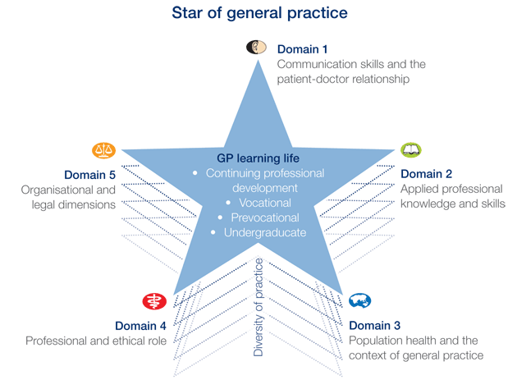
    The RACGP uses the star analogy to describe general practice through 5 domains of general practice:

    How would you help Nicole address the Unknown Unknowns in this scenario?

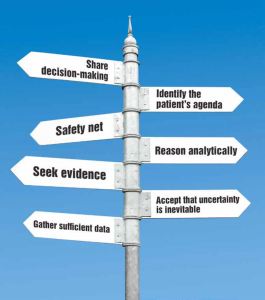
    Teaching the registrar about uncertainty in the context of Long COVID

      • Accept that uncertainty is inevitable
      • Gather sufficient data
      • Identify the patient’s agenda
      • Reason analytically
      • Share decision-making
      • Seek evidence
      • Safety net

    Why is Nicole asking for help?

    What is the registrar really asking of you?

    "Save me!"
    "Help me!"
    "Reassure me!"

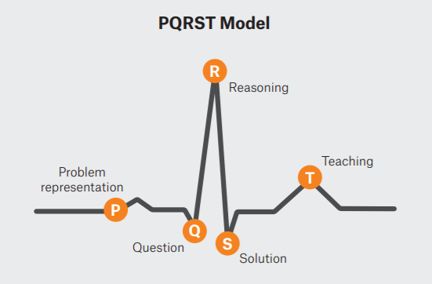
    How can the PQRST framework be used here?

    What is the PQRST model?

    P – What is the patient’s problem?
    Q – What is the registrar’s question?
    R – How well does the doctor reason?
    S – What is the solution?
    T – What can be taught?

    Frequently Asked Questions

    The term ‘long COVID’ is generally used to describe both:

    • Ongoing symptomatic COVID-19 – COVID-19 symptoms lasting more than 4 weeks
    • Post-Acute Sequelae of COVID-19 (PASC), also known as post-COVID-19 condition/syndrome

    “Post COVID-19 condition occurs in individuals with a history of probable or confirmed SARS-CoV-2 infection, usually 3 months from the onset of COVID-19 with symptoms that last for at least 2 months and cannot be explained by an alternative diagnosis.

    Common symptoms include fatigue, shortness of breath and cognitive dysfunction, as well as others that generally have an impact on everyday functioning. Symptoms may be new onset, following initial recovery from an acute COVID-19 episode, or persist from the initial illness.”

    • PASC is an emerging health issue, both in Australia and internationally.
    • Uncertainty remains regarding the prevalence of PASC in Australia.
    • Due to Australia’s unique context, the prevalence and impact of PASC will likely differ from that experienced internationally.
    • PASC develops in patients after the acute phase of COVID-19, regardless of initial disease severity.
    • It is a multisystemic condition with unclear pathogenesis.
    • With more than 200 symptoms described in the literature, patient presentation varies.
      Symptoms can be episodic and may fluctuate or relapse over time.
    • Known risk factors include:
      • Female sex
      • Older age
      • Not being up-to-date with vaccination against COVID-19
      • Severity of initial COVID-19 infection
      • Pre-existing co-morbidities
    • A current challenge with diagnosing PASC is the lack of consensus regarding classifications and diagnostic criteria.
    • No PASC specific diagnostic tests are currently approved in Australia.
      • If a diagnostic test was developed, it would require evaluation under the Therapeutic Goods Administration’s in vitro diagnostic regulatory framework.
      • To be funded under Medicare, the Medical Services Advisory Committee would need to assess its comparative safety, clinical effectiveness, cost-effectiveness, and total cost, and provide advice to Government.   
    • There are no medicines currently listed on the Pharmaceutical Benefits Scheme for the treatment of PASC.
      • Medicines may be available to treat symptoms related to PASC.

    Sick and Tired: Casting a long shadow’ summary of report recommendations:

    • Improving data and data linkage on COVID-19 including long COVID through a single COVID-19 database
    • A definition of long COVID for interim use in Australia
    • Evidence-based guidelines for diagnosis and treatment co-designed with patients with lived experience
    • A nationally coordinated research program for long COVID and COVID-19
    • Improving COVID-19 vaccination communications for all population groups
    • Continuing to review the benefits of, and expanding access to, antiviral treatments for COVID-19
    • Improving the support provided to people experiencing long COVID with a focus on primary care supports
    • Indoor air quality and ventilation
    • The central role of primary care, particularly GPs, in management of people with PASC was emphasised throughout the Inquiry given:
      • A large proportion of patients with PASC have chronic symptoms.
      • PASC is considered to be a multisystem disease that can have psychosocial impacts.
    • Most people with PASC can be effectively managed through primary care services.
      • A small number of patients may require other (non-GP) specialist care.
    • People with PASC symptoms are likely to seek review from their GP in the first instance.
      • GPs have a key role in diagnosing, managing and supporting people with PASC.
    • For those requiring multidisciplinary care, GPs play an important role in referring patients to allied health services and coordinating ongoing patient management.
    • To be effective, primary care needs to be supported with education, specialist input, guidelines and resources.
    • Most people with PASC will receive management and support through primary care.
    • The Department of Health and Aged Care is developing a National PASC Plan. The Plan will be informed by:
      • Input from a number of areas across the Department
      • Recommendations handed down by the Committee
    • Key aims of the Plan are to:
      • Improve health system ability to deliver models of clinical care to people living with PASC
      • Develop PASC health resources for the public and healthcare providers
      • Support research to increase our knowledge of PASC and guide future policy and clinical care
    • The plan will be part of the Australian Government’s formal response to the Committee’s findings.

    Date reviewed: 13 November 2025

    Please note that while reasonable care is taken to provide accurate information at the time of creation, we frequently update content and links as needed. If you identify any inconsistencies or broken links, please let us know by email.

    This website uses cookies. Read our privacy policy.

    FAQ

    FAQ: Teaching Your Registrar About Men's Health

    Let’s start with a case study

    Preventative interventions in males

    Your female registrar discusses a 50 year-old man she saw this morning for a checkup:

    • born in Vietnam
    • emigrated in 1998
    • speaks reasonable English
    • a smoker
    • obese
    • high lipids
    • BP 164/90
    •  HbA1c 6.6%
    • has always thrown his National Bowel Screen kit in the bin.

    She admits she became frustrated when much of the discussion side-tracked to whether he should get an STI check, because he said “I am married and don’t need those sorts of things”, becoming visually upset. 

    What are the possible learning points for your registrar?

    1. in terms of the consultation flow?
    2. in terms of communication?
    3. in terms of clinical value for preventive health effort?

    In terms of health value, what are the greatest risks for this patient?

    For a man aged 50, the benefit is greatest for quitting smoking (24 fewer deaths per 1000 males per decade), which is 10 times the benefit of lowering lipids in a man with metabolic syndrome and 50 times greater than from participating in regular colorectal cancer screening.*

    Benefits for women are generally lower, as their baseline risk is lower.*

    *Ewald B, Del Mar C, Hoffman T. Quantifying the benefits and harms of various preventive health activities. AJGP (2018) vol 47:12

    At what ago do you recommend PSA screening to your mal patients during a general checkup?

    • Screening is not recommended because the benefits have not been clearly shown to outweigh the harms
    • GPs have no obligation to offer PSA testing to asymptomatic men
    • If requested, after specific discussion to address the benefits and harms (from overdiagnosis and overtreatment) of prostate cancer screening, a PSA test is acceptable
    • There is no doubt Australian doctors order too many PSA screening tests.**

    ** Coleman J. Excessive PSA testing in general practice. Med J Aust 2021; 215 (5)


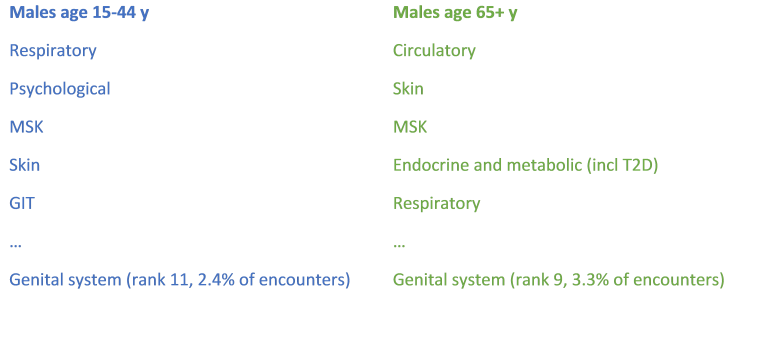
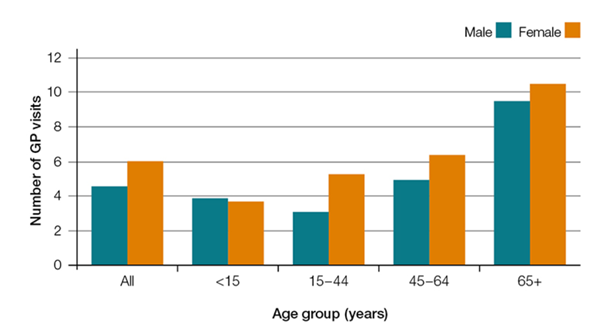
    BEACH statistics: male presentations in general practice

    Frequently Asked Questions

    • Overweight or obese; 1/4 older boys, 2/3 adult males
    • Sufficient physical activity in men ≥ 65y; 25%
    • Sufficient fruit and vegetable intake; 5%
    • 4 out of 5 heroin overdose deaths occur in males
    • 93% workplace deaths are in males (56% of the workforce)
    • Convicted for acts of violence, 90% male
    • Victims of violence, 80% male
    • Documented behavioural problems in schools, 90% male.
    • In every age group (including infancy) male deaths > female
    • In 1900, average life expectancy males 55y, female 58y
    • <14y M:F Death from accidental injury 2:1
    •  15–24y M:F MVA 3:1, suicide 3:1, all-cause 3.6:1
    • 25–65y M:F CAD 4:1, accidents 4:1, suicide 3:1, cancer 2:1, all-cause 2:1
    *** Murtagh’s General Practice, 8th edition (2022). Ch 102 Male Health
    • Ask health screening questions and discuss preventative health measures 
    • Raise sexual and mental health concerns
    • Use their language – men have a wide variety in health literacy, sometimes unexpectedly
    • Assessing the patient’s literacy goes a long way in how you engage with each person and what type of health language you use  
    It is common that those with a lower health literacy have bigger health problems (lower socio-economic)
    Yes!
    • This can increase men’s engagement in their own health and therefore their relationship with their GP 
    • Understanding the individual and what their interests are (i.e. footy team, occupation etc ) can enhance future engagement 
    • Revealing your own interests (within reason – e.g. your footy team) can also enhance a patient-doctor relationship
    • When appropriate, simplify messages and instructions:
      • Information overload can be a major problem especially with complex medical issues  
      • A simple approach can mean the difference between a patient engaging and disengaging
      • Clear-cut simplified written instructions can be helpful
    These can be summarised by the 5 A’s approach****
    1. Ask about risk factors or early signs of major health problems.
    2. Assess the level of risk and diagnose as early as possible.
    3. Advise and motivate patients to lower their risk. 
    4. Assist patients with pharmacological and non-pharmacological therapies.
    5. Arrange referral and follow-up. 

    Date reviewed: 13 November 2025

    Please note that while reasonable care is taken to provide accurate information at the time of creation, we frequently update content and links as needed. If you identify any inconsistencies or broken links, please let us know by email.

    This website uses cookies. Read our privacy policy.
    FAQ

    Resource: Telehealth Tips for Aboriginal Patients Hard of Hearing

    Explore practical resources to support effective telehealth consultations with Aboriginal patients who are hard of hearing. Learn strategies to enhance communication and provide culturally sensitive care.

    For convenience, you can read through this resource here, or use the pdf tools at the top of the document to download and / or print the file. 

    Date reviewed: 10 November 2025

    Please note that while reasonable care is taken to provide accurate information at the time of creation, we frequently update content and links as needed. If you identify any inconsistencies or broken links, please let us know by email.

    This website uses cookies. Read our privacy policy.