Board Members
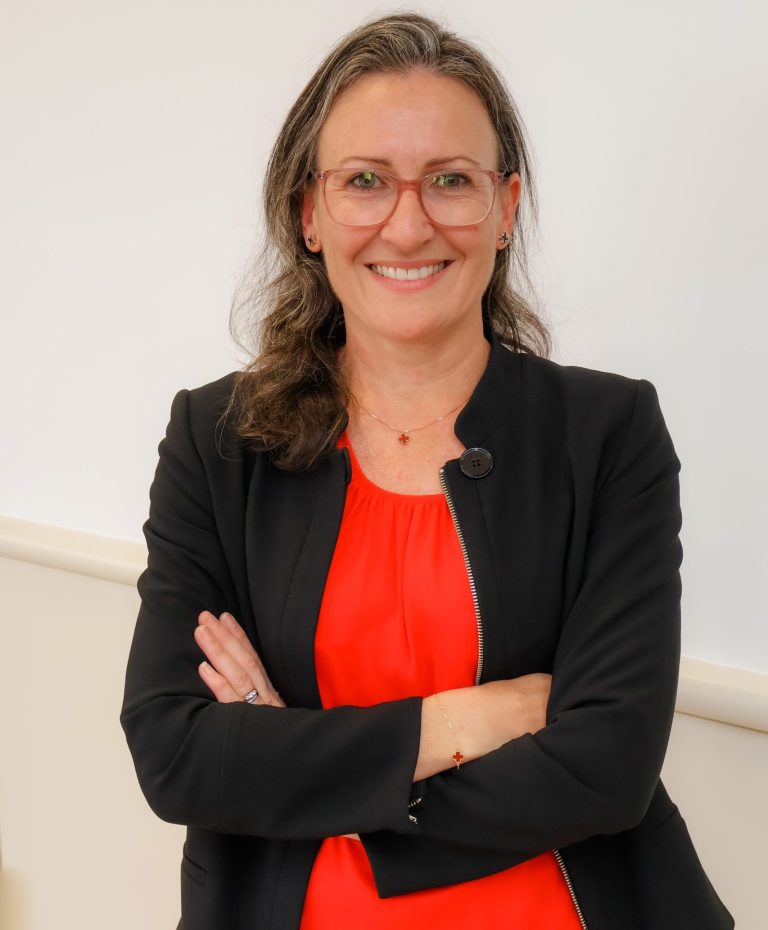
Dr Candice Baker
"We really are building the future of general practice" Dr Candice Baker, GP Supervisor and GPSA Board Director
Candice obtained fellowship as an Australian General Practitioner in 2015, then as a Canadian Family Physician in 2019. She has worked at a training practice in regional Victoria for 10 years.
This is where the seeds of passion for medical education were sown through supervision of medical students and registrars before becoming an accredited supervisor early in 2022.
How have you arrived at your GPSA role?
“I have a desire to contribute within general practice supervision, to try to ignite some change, and help support the profession.
“That desire has been born out of the environment that I trained in and therefore the same sort of environment that I want to create and promote in terms of general practice supervision. It stems back to when I did my training and that amazing environment, surrounded by my supervisors, and a culture of teaching and learning: where everyone was a teacher and a learner at the same time. I identified with these colleagues, and they were pivotal in shaping my desire to follow their lead.
“I identified with these colleagues, and they were pivotal in shaping my desire to follow their lead”
“With regards to my role on the GPSA Board specifically, I think that’s probably a combination of my love of teaching with a hint of opportunity and a whole lot of luck – falling into things at the right time and the right place. Dr Madhu Tamilarasan, a GP Supervisor and former GPSA Director and friend, motivated me to engage actively with GPSA. Despite my hesitation about my suitability for the Board, Madhu encouraged me to throw my hat in the ring. She was a great inspiration to me.”
How have your various roles prepared you for your work with GPSA?
“The training environment I experienced enabled me to get involved in education in various forms. As a 2nd year registrar, I was involved in supervising medical students and I was also a Registrar Medical educator (RME) with my Victorian RTO.
“I also work for Monash University School of Rural Health and assist in the running of their general practice program for their Year 4 students. These roles were quite complementary to general practice supervision and allowed me to understand the breadth of supervision, and in fact, what it means to be a supervisor.
“And I’m currently a Supervisor Liaison Officer (SLO) which is a complementary role to everything in terms of advocating and works nicely with my GPSA Board role.
“It all seems to be a very natural progression for me, and I have just gone where the path has taken me.”
Do you see opportunities for GPSA’s education products internationally?
“I think there are opportunities for GPSA to expand to specific international markets where the core knowledge is the same throughout. For example, in looking at Canada where I spent some time during Covid, there were no major differences to Australia in terms of primary health care.
“In terms of SCENARIO, GPSA’s phone application, I think it’s really helpful and could be applied in other health care settings. Particularly for new supervisors, who maybe just haven’t quite figured out exactly how they want to structure their teaching sessions, or whether they’re stuck for what to cover at a particular stage in their learner’s journey.
“This application offers a form of convenience and a certain spontaneity that can be helpful. SCENARIO can flush out streams of deficiencies or things that maybe the learner needs to focus a bit more on. For example, was their respiratory knowledge as good as their cardiology knowledge; are they not as good at communication versus legal concepts.
“I think there is huge potential for growth within different areas of specialization, whether that’s obstetrics or emergency. I can see it being used much more widely and I’ve certainly found it useful and a fun thing to add to our teaching sessions with my registrars.”
What challenges are presently of greatest concern in the realm of supervision for our members that you’re aware of?
“I have three issues when I speak to supervisors that are top of mind:
- The sustainability of supervision – in the sense of the current apprenticeship model in general practice and what that looks like into the future.
- Appreciation of supervision is a big concern and, in particular, how supervisors are viewed In the wider scheme of things. With the transition of GP training back to the colleges, I think that has led to some under appreciation and undervaluing of the supervisors on the ground. There has been lots of new work and new assessments being introduced with limited consultation on the ground about how that would work in practice.
- Thirdly, remuneration is always a hot topic. I think we’re all aware that GP supervisors give way more than what most people would at the hourly rate they get paid. There seems to be this constant idea that supervisors can just do more, and that’s okay. Can we create a sustainable, high quality general practitioner at the end of training, if we don’t nourish the people that are nourishing them? We wouldn’t expect to have a bountiful garden full of vegetables if we didn’t actually take care of the soil. I think supervisors are the soil that helps grow our future workforce.”
What solutions do you see that we offer to our members? What are we doing to help?
“GPSA is striving to lead from the front. I think our presence is more visible and the organisation is more prominent compared to perhaps 3-5 years ago.
“I believe we’re doing a great job advocating for those at the coalface and that’s partly because the Board of Directors are supervisors – we are the people we represent. We’ve got a firsthand idea of what it’s like to be on the ground and doing supervision work. That puts us in an excellent position to be able to advocate for change and be heard. We are very good at listening to our members and making sure that we sort of get a seat at every table to talk about issues that are important to general practice supervision.
“I firmly believe you can’t effect change if you’re not actually involved in the conversation. From that perspective, it’s been a successful couple of years in terms of having a seat at each table and being able to do that.”
Message to fellow supervisors
“My main message to fellow supervisors is that we value you. A while ago I was told by a colleague at Monash, “we really value what you do”. I suddenly thought, no one’s ever really said that to me. As supervisors, we really don’t get told that we are valued for what we do. Now I make a concerted effort when I catch up with my local supervisors to tell them that we really value having them as part of the team. And if there’s anything that we can do to make life a bit easier for them, then tell us. Acknowledging their indispensable role in general practice training is crucial. Without supervision and the dedicated work of supervisors on the ground, training simply wouldn’t be possible. We really are building the future of general practice and GPs in Australia.
“We really are building the future of general practice and GPs in Australia.”
“Additionally, I really feel strongly about finding a way to further engage practices that are committed to education and training at a high level of quality. It’s important we come up with a set of standards for supervision that allow us to ensure that we are putting supervisors and registrars into supported practices, and that we know that trainees are going to get a good training experience. The GPCLE tool has a huge role to play in this work. It sets the standard of supervision and whether we’re meeting that bar as training organizations or training practices. This is an important focus over the next couple of years.”
Date reviewed: 24 June 2025
Please note that while reasonable care is taken to provide accurate information at the time of creation, we frequently update content and links as needed. If you identify any inconsistencies or broken links, please let us know by email.